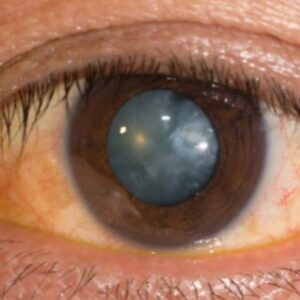




Cortical cataracts develop in the outer part of your eye’s lens. They usually appear as white or cloudy wedges pointing toward the center. As they get worse, these cloudy spots scatter light, making it harder to read, drive, or see clearly in dim lighting.
Learning what causes cortical cataracts, how they develop, and when to seek treatment can help you protect your vision and make informed choices about your eye health.
Causes of Cortical Cataracts
Cortical cataracts occur when the transparent protein fibers in the lens’s outer layer deteriorate and aggregate. This process causes lens clouding and scatters incoming light, potentially adversely affecting vision.
Although aging is the main cause of cortical cataracts, other factors can also increase your risk.

1. Aging
As you get older, the fibers in your lens lose flexibility and become less clear. Most people develop cortical cataracts after age 60, but these changes can start earlier.
2. Diabetes
If you have diabetes, you are more likely to develop cortical cataracts. High blood sugar can cause substances to build up in your lens, leading to swelling and damaging the proteins that keep it clear.
3. High Blood Pressure
Over time, high blood pressure can also raise your risk of cortical cataracts. It can affect the blood vessels in your eyes and harm the health of your lens.
4. Smoking
Smoking speeds up changes in the proteins in your lens. If you smoke for a long time, you may get cortical cataracts earlier than people who do not smoke.
5. UV-B Radiation
Your lens takes in ultraviolet (UV) light from the sun every day. Over time, too much UV exposure can damage your lens, especially if you do not wear sunglasses that block UV rays.
6. Poor Nutrition
If you do not get enough antioxidants in your diet, your risk for cortical cataracts increases. Not getting enough vitamin C, vitamin E, or nutrients like lutein and zeaxanthin can accelerate cataract development.
7. Genetics
Genetics can also play a role in whether you develop cortical cataracts. Some people inherit genes that make them more likely to get this type of cataract. Changes in these genes can affect the proteins in your lens, causing cloudiness at a younger age.
Cortical cataracts usually get worse slowly. If you have uncontrolled diabetes or if you smoke, they can get worse more quickly.
Symptoms of Cortical Cataracts
Cortical cataracts make your vision less clear because the cloudy spots in your lens scatter light as it passes through the lens.
Common symptoms include:
• Glare Sensitivity
Bright sunlight, headlights, or indoor lights may feel too bright or uncomfortable.
• Halos Around Lights
You may notice this most at night, when you see rings or starbursts around headlights or streetlights.
• Blurred or Hazy Vision
Your vision may look cloudy or faded, even with a new glasses prescription.
• Difficulty Seeing in Low Light
Night vision often declines before you notice any changes in your daytime vision.
• Reduced Contrast Sensitivity
It can get harder to see objects clearly, especially in dim light or when things do not stand out from the background.
• Altered Color Perception
Colors may look less bright or more faded than you remember them.
• Difficulty With Depth Perception
You may find it harder to judge distances, especially when you are driving or going down stairs.
The symptoms you notice can change based on lighting, where the cataract is in your lens, and how thick the cloudy spots are.
Treatment Options for Cortical Cataracts
You can often manage early symptoms without surgery. If cataracts get worse and start to affect your daily life, surgery is usually needed to help you see clearly again.
1. Non-Surgical Management (Early Stages)
These steps can help you see better for a while:
- Updated eyeglass prescription
- Anti-glare coatings on glasses
- Brighter indoor lighting
- UV-protective sunglasses
- Avoiding nighttime driving
- Managing
- and blood pressure
These steps cannot reverse cataracts, but they can help you see more clearly and stay comfortable for as long as possible.
2. Cataract Surgery (Definitive Treatment)
Cataract surgery is the main treatment when cataracts start to interfere with your daily life. It is a safe, common procedure performed worldwide.
How Cataract Surgery Works
- A tiny incision is made at the edge of the cornea.
- The cloudy lens is broken up (usually with ultrasound or a femtosecond laser).
- The pieces are removed.
- A clear artificial lens, called an intraocular lens or IOL, is put in your eye to replace the cloudy one.
• Monofocal IOL
This lens helps you see clearly at a distance, but you may still need reading glasses.
This lens helps you see clearly at a distance, but you may still need reading glasses.
• Multifocal IOL
This lens helps you see at different distances, such as far away, at the computer, and up close for reading.
This lens helps you see at different distances, such as far away, at the computer, and up close for reading.
• Toric IOL
This lens can correct astigmatism during your cataract surgery.
This lens can correct astigmatism during your cataract surgery.
Your eye doctor will help you choose the lens that fits your lifestyle, vision needs, and eyes.
Recovery
Most people notice clearer vision within a day or two after surgery. You will need to use eye drops for a few weeks to help your eye heal and prevent infection.
Cataract surgery is very successful. Most people notice a big improvement in their vision, especially in low-light conditions.
Prevention of Cortical Cataracts
You cannot always prevent cataracts, but healthy habits can help lower your risk or slow them down.
• Wear 100% UV-blocking sunglasses
Wearing sunglasses that block 100% of UV rays is one of the easiest and best ways to protect your eyes from the sun’s harmful rays.
• Eat a healthy, nutrient-rich diet
Try to eat foods that are rich in these nutrients:
Vitamin C (citrus, berries, peppers)
Vitamin E (nuts, seeds, spinach)
Carotenoids: lutein + zeaxanthin (kale, spinach, eggs)
• Quit smoking
Quitting smoking can help slow down cataract progression and keep your eyes healthier.
• Manage diabetes and hypertension
• Exercise regularly
Regular exercise helps keep your blood flowing well and can reduce strain on your eyes and body.
• Schedule regular eye exams
Regular eye exams can help find cataracts early. You and your eye doctor can then decide together when surgery may be needed.
Conclusion
Cortical cataracts are a common eye problem as you get older. They can make glare more bothersome, make it harder to drive at night, or make it difficult to see things clearly. Early symptoms can often be managed with changes in your routine and better lighting. Surgery is the main treatment and usually works very well.
Healthy habits, wearing sunglasses, and regular eye exams can help keep your vision clear and help you get treatment when you need it.
If you notice glare, halos, or changes in your vision that make daily life harder, talk to your eye doctor. Your doctor can monitor your cataract and help you decide what to do next.
FAQs
1. Are cortical cataracts more common in one eye or both?
Cortical cataracts often develop in both eyes, but they do not always progress at the same rate. One eye may worsen more quickly due to differences in sun exposure, injury, or health conditions.
2. How fast do cortical cataracts progress?
Cortical cataracts usually worsen slowly over the years, but progression can vary. Diabetes, smoking, and lots of sun exposure can make them get worse faster, while healthy habits may slow them down.
3. Can cortical cataracts cause double vision?
Yes. As the outer part of the lens gets cloudy and scatters light, some people notice double vision in one eye. This is a classic symptom that can sometimes be missed.
4. Are cortical cataracts more likely to cause glare than other types?
Yes. Because cortical cataracts form in the outer part of the lens, they scatter light earlier and more strongly. This increases the likelihood of glare, halos, and nighttime driving problems compared with other types of cataracts.
5. Will glasses help improve vision caused by cortical cataracts?
Glasses may help for a while in early-stage cortical cataracts, but they cannot fix the cloudiness in your lens. As the cataract worsens, new prescriptions do not improve vision, and surgery becomes the only option to restore clear vision.