



Contents
hide
Children’s vision is how the eyes and brain work together to help your child see clearly as they grow. Vision changes quickly in early childhood. If eye problems are not found early, they can affect your child’s learning, development, and long-term eye health. Regular eye exams help find problems early and protect your child’s vision.
Clear vision is important for your child’s learning, development, and social life. If eye problems are not found and treated early, they can affect how your child’s brain develops and may even cause permanent vision loss.
This guide explains how vision develops in children, common eye problems, signs and symptoms to watch for, when to schedule eye exams, tips for choosing glasses, and ways to protect your child’s eyesight.
How Vision Develops in Children
Newborns start life with blurry vision because their eyes and brains are not fully developed. As your child grows, their eyes and brain gradually learn to process visual information together. Each stage of visual development plays a key role in your child’s long-term eye health.
Stages of Visual Development
- Birth to 6 months:
Babies begin to focus, follow moving objects, and recognize faces. Their vision is still blurry, but the eyes and brain are starting to work together. - 6 to 12 months:
Babies begin to see depth and distance, and their eyes start working together more effectively. This helps them judge how far away things are and follow moving objects. - 1 to 3 years:
Your child’s vision continues to improve during these years. Better vision helps them reach for toys, stack blocks, and explore their surroundings. - 3 to 5 years:
Children begin to notice smaller details, like shapes and letters. This prepares them for reading and learning in school. - School age:
By the time your child starts school, their vision should allow them to read, play sports, and use screens comfortably. If vision problems are present at this stage, it can make it harder to do well in class or pay attention.
If your child has blurry or blocked vision early in life, it can slow their visual development, even if the problem is corrected later. Early eye exams and prompt treatment are important to support healthy vision.
Why Children’s Vision Is So Important
Your child’s vision affects nearly every part of their daily life, including:
- Learning and reading skills
- Attention and classroom performance
- Balance and coordination
- Social interaction and confidence
Undiagnosed vision problems can manifest as learning difficulties, behavioral issues, or poor school performance. Children often do not report eye discomfort or changes in their vision.
Common Vision Problems in Children
✔ Refractive Errors
Refractive errors happen when light doesn’t focus the right way on the back of the eye (the retina). This makes things look blurry.
Nearsightedness (Myopia) | Difficulty seeing distant objects |
Farsightedness (Hyperopia) | Difficulty focusing on close objects |
Astigmatism | Blurred vision at all distances |
✔ Amblyopia (Lazy Eye)
Amblyopia, also called lazy eye, is when one eye does not develop normal vision. This often happens when there is a difference in vision between the two eyes or when the eyes are misaligned. Early treatment for amblyopia is important to prevent permanent vision loss.
✔ Strabismus (Eye Misalignment)
Strabismus is when the eyes are not lined up in the same direction. This can affect your child’s depth perception and vision development.
✔ Eye Infections
Eye infections, such as conjunctivitis (pink eye), are common in children. Most infections can be treated, but it is important to have an eye doctor check your child’s eyes if you notice redness, discharge, or other changes.
✔ Less Common but Serious Conditions
- Congenital cataracts
- Retinal disorders
- Optic nerve abnormalities
Finding and treating these serious conditions as early as possible is important to protect your child’s vision and prevent long-term problems.
Signs of Vision Problems in Children
Kids don’t always know when their vision isn’t clear, and they may not know how to tell you what’s wrong. That’s why it’s important for parents and caregivers to watch for signs of vision problems.
Some common signs of vision problems in children include:
- Squinting or closing one eye to see better
- Rubbing their eyes frequently, especially after reading or screen time
- Complaining of headaches or tired eyes
- Holding books, tablets, or toys very close to their face
- Tilting or turning the head when looking at things
- Struggling with reading or falling behind in school
- Sensitivity to light
- Difficulty following moving objects
If you notice any of these signs, schedule a full eye exam for your child. Many vision problems are easy to fix if you catch them early. Quick treatment can help prevent vision or learning problems later on.
Can Vision Problems Affect Learning and Behavior?
Yes, vision problems can affect learning and behavior, and this often surprises parents.
Children rely on their eyesight for almost everything they do at school. Reading, writing, copying from the board, paying attention in class, and playing with other children all depend on clear, comfortable vision. When a child cannot see well, learning can quickly become tiring or frustrating.
Sometimes, vision problems do not appear as obvious eye issues. A child who struggles to see may seem distracted, lose interest in schoolwork, or avoid reading. Some children may act out because they are frustrated or tired from trying to see clearly.
Sometimes, the signs of vision problems can be subtle. Here are a few things parents often spot:
- Your child keeps losing their spot when reading or skipping lines in a book.
- They make excuses to avoid homework or aren’t interested in reading.
- Sore eyes or headaches may occur, especially after reading or screen time.
- You notice they have a hard time copying notes from the board at school.
- Even when they try their best, they seem to fall behind their classmates.
- They seem more frustrated or less confident than usual, or their mood changes when it’s time for schoolwork.
Because these signs can overlap with learning or attention difficulties, vision issues are sometimes missed. Once a vision problem is identified and treated, many children show improvement not only in school but also in confidence and behavior.
This is why regular eye exams are important, especially before school starts and during the early school years. Good vision helps children feel comfortable in the classroom, stay focused, and enjoy learning.
When Should Children Have Eye Exams?
Some children need eye exams earlier or more often, especially if they were born prematurely, have a family history of eye problems, or have certain health conditions like diabetes.
Vision Tests for Children
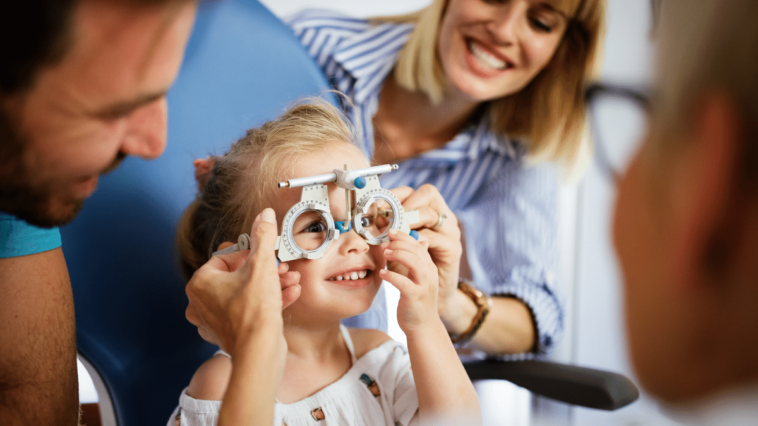
A pediatric eye exam may include:
- Visual acuity testing
- Eye alignment and movement checks
- Refraction testing
- Depth perception evaluation
- Eye health examination
These tests are painless and are selected based on your child’s age and ability to participate.
Eyeglasses for Children: What Parents Should Know
✔ Best Frame Features
- Lightweight materials
- Durable construction
- Flexible temples
- Comfortable nose pads
✔ Recommended Lenses for Kids
Lens Type | Why It’s Recommended |
Polycarbonate | Impact-resistant, lightweight |
Scratch-resistant coating | Longer lens life |
UV protection | Shields developing eyes |
Anti-reflective (optional) | Reduces glare |
When choosing glasses for your child, look for frames that are safe and durable, not just stylish. The right frames can help your child feel comfortable and confident wearing their glasses.
Screen Time and Children’s Vision
Spending too much time on screens may contribute to:
- Eye strain
- Dryness
- Headaches
- Increased risk of myopia
Healthy Screen Habits
- Encourage your child to follow the 20-20-20 rule. Every 20 minutes, they should take a 20-second break to look at something at least 20 feet away.
- Encourage outdoor play
- Maintain proper screen distance.
- Limiting your child’s daily recreational screen time can help protect their eyes and reduce the risk of eye strain.
Protecting Your Child’s Eyes
There are many simple steps you can take each day to help maintain your child’s eye health. Practicing healthy habits consistently can make a big difference over time.
Make sure your child receives regular eye exams, even if they do not seem to have any problems. When outdoors, your child should wear sunglasses that block ultraviolet (UV) rays. If your child plays sports, make sure they use protective eyewear to help prevent injuries.
At home, provide good lighting, especially for reading or homework. Encouraging outdoor play also gives your child’s eyes a healthy break from screen time.
These simple steps can help keep your child’s vision clear and their eyes comfortable.
Supporting Children With Low Vision
Children with low vision can still learn, play, and succeed when they receive the right support early. With the right tools and help, many children can achieve just as much as their peers.
Helpful support may include:
- Using magnifiers or large-print materials
- Improving lighting and contrast at home or school
- Vision therapy, when recommended
- Classroom adjustments to make learning easier
Early intervention can help your child become more confident and independent. It can also make school and daily activities easier and more enjoyable.
When to See an Eye Doctor Urgently
Seek immediate care if your child has:
- Sudden vision loss
- Eye injury
- Eye pain or redness
- White pupil or abnormal reflection
- Sudden eye misalignment
These symptoms may be signs of a serious eye problem. If you notice any of them, have your child evaluated by an eye doctor right away.
Children’s Vision vs Adult Vision (Comparison)
Visual system | Still developing | Fully developed |
Brain adaptability | High | Limited |
Risk of permanent vision loss | Higher if untreated | Lower |
Importance of early exams | Critical | Important |
FAQ
At what age should a child get their first eye exam?
Most children should have their first eye exam between 6 and 12 months of age. If you notice any concerns about your child’s eyes or vision, schedule an earlier checkup.
Can vision problems affect school performance?
Yes. Clear vision is important for reading and learning. If a child has trouble seeing, it can make it harder to keep up in school and may affect confidence.
Do children outgrow vision problems?
Some vision issues, such as certain refractive errors, may change as your child grows. Many problems need treatment to prevent long-term effects. Regular checkups are important.
Is screen time harmful to children’s eyes?
Screen time does not cause permanent eye damage, but excessive use can lead to eye strain and increase the risk of nearsightedness (myopia). Taking regular breaks and spending time outdoors helps protect your child’s eyes.
How often should children have eye exams?
It is recommended that children have their eyes checked every 1 to 2 years, or as advised by an eye doctor. Some children may need more frequent exams depending on their needs.
Summary
A child’s vision is important for learning, movement, and interacting with others. Vision develops early, so undetected problems can have long-term effects. Most vision problems in children can be treated if found early.
Regular eye exams, healthy habits, and prompt care give your child the best chance for clear vision.
If you notice any changes in your child’s vision or behavior, contact an eye doctor right away. Taking care of your child’s eye health early can make a big difference in their future.