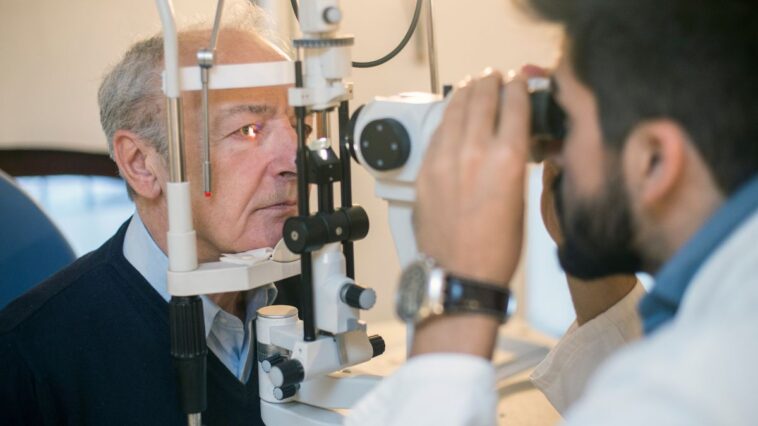
A diabetic eye exam is a test that looks for vision problems caused by diabetes. This exam can find issues before you have symptoms. Finding problems early can help prevent vision loss, diabetic retinopathy, and blindness. Many of these problems can develop slowly and without clear warning signs.
If you have diabetes, getting regular diabetic eye exams is one of the best ways to protect your eyesight.
What Is a Diabetic Eye Exam?
A diabetic eye exam is a dilated eye exam done by an
eye doctor, like an ophthalmologist or optometrist, to check for damage in your eyes that high blood sugar can cause.
This exam allows your eye doctor to examine important parts of your eyes in detail, including the following:
- The retina
- Blood vessels in the back of the eye
- The optic nerve
- Signs of swelling or leakage
- Early changes linked to diabetic eye disease
Diabetic eye disease often begins without symptoms. That’s why it’s important to have regular eye exams, even if your vision seems fine.
Why a Diabetic Eye Exam Is So Important
Diabetes can damage small blood vessels throughout the body — including those in the eyes. Over time, this damage can lead to serious vision problems such as:
- Diabetic retinopathy
- Diabetic macular edema
- Cataracts
- Glaucoma
- Permanent vision loss
What makes diabetic eye disease especially dangerous is that it often develops without warning signs. In the early stages, most people feel no pain and notice no change in their vision.
By the time symptoms appear, the damage may already be advanced.
A diabetic eye exam allows eye doctors to detect problems early — often before vision is affected. When caught early, treatment is far more effective and can help protect your sight long-term.
That’s why regular eye exams are one of the most important steps you can take to preserve your vision if you have diabetes.
How Diabetes Affects the Eyes
High blood sugar can weaken the blood vessels in your retina, which may cause them to:
- Leak fluid or blood
- Become blocked
- Grow abnormally
- Reduce the amount of oxygen that reaches the retina.
Over time, this can lead to blurred vision, dark spots, or even blindness if not treated.
Types of Diabetic Eye Disease
1. Diabetic Retinopathy
Diabetic retinopathy is the most common eye complication of diabetes.
🔹 Non-Proliferative Diabetic Retinopathy (NPDR)
This is the first stage of diabetic retinopathy.
During this stage, the blood vessels in the retina may leak fluid or blood.
There are often no symptoms during this stage.
🔹 Proliferative Diabetic Retinopathy (PDR)
This is the later, more advanced stage of diabetic retinopathy.
At this stage, abnormal new blood vessels begin to grow in the retina.
This stage carries a high risk of bleeding inside the eye and significant vision loss.
2. Diabetic Macular Edema (DME)
Diabetic macular edema is swelling in the central part of the retina, called the macula.
This swelling can make your central vision blurry or distorted.
Diabetic macular edema can develop at any stage of diabetic retinopathy and is a leading cause of vision loss in people with diabetes.
3. Cataracts
Cataracts mean the lens of your eye becomes cloudy.
They tend to develop earlier and progress faster in people with diabetes.
4. Glaucoma
Glaucoma happens when the pressure inside your eye goes up.
This increased pressure can damage the optic nerve, which is essential for vision.
People with diabetes are almost twice as likely to get glaucoma as those without diabetes.
What Happens During a Diabetic Eye Exam?
A full diabetic eye exam usually includes several important tests, such as:
✔ Vision test
✔ Eye pressure measurement
✔ Pupil dilation using special drops
✔ Retina and optic nerve examination
✔ Retinal photography or OCT scan (if needed)
✔ Evaluation for macular edema or bleeding
The exam usually takes about 30 to 60 minutes.
The exam does not hurt, but your eyes may be sensitive to light for a short time after your pupils are dilated.
How Often Should You Have a Diabetic Eye Exam?
How often you need a diabetic eye exam depends on your type of diabetes, how long you’ve had it, and whether you already have any eye damage. Because diabetic eye disease often starts without symptoms, regular eye exams are important even if your vision seems normal.
Finding problems early means you can start treatment before vision loss happens. Regular screening is an important part of diabetes care.
Most people with diabetes should get a dilated eye exam at least once a year. Some may need exams more often if they have a higher risk or already have changes in their eyes.
| Patient Type |
Recommended Frequency |
| Type 1 Diabetes |
within 5 years of diagnosis, then annually
|
| Type 2 Diabetes |
At diagnosis, then yearly |
| Pregnancy + Diabetes |
Before pregnancy & each trimester |
| Existing Retinopathy |
Every 3–6 months |
Your eye doctor might suggest more frequent exams based on your eye health and personal risk factors.
Who Is Most at Risk for Diabetic Retinopathy?
Anyone with diabetes can get diabetic retinopathy, but some people are at higher risk than others. The risk goes up over time, especially if certain health factors are present.
You may be at greater risk if you:
- Have had diabetes for many years, especially if it has been poorly controlled
- Struggle to keep blood sugar levels within target range.
- Have high blood pressure or high cholesterol.
- Are you overweight or not physically active?
- Smoke or have smoked in the past
- Are pregnant, particularly if you have pre-existing diabetes
- Have kidney disease or other diabetes-related complications
- Have a family history of eye disease or vision problems.
The more risk factors you have, the higher your chance of developing diabetic retinopathy.
That’s why regular eye exams are so important, even if your vision seems normal. Early detection lets treatment begin before any permanent vision damage happens.
Symptoms of Diabetic Eye Disease
One of the hardest things about diabetic eye disease is that you may not notice anything wrong at first. Many people feel fine in the early stages, even as changes slowly happen inside the eye. That’s why regular eye exams matter—they can find problems long before your vision is affected.
As the condition progresses, you might begin to notice changes such as:
- Blurred or shifting vision, especially from day to day
- Small dark spots or floaters drifting across your vision
- Difficulty seeing at night or adjusting to low light
- Colors appearing dull or less sharp than before
- Sudden or partial vision loss, in more advanced cases
These symptoms can be easy to dismiss at first, especially if they come and go. However, even mild or occasional changes can be a sign that diabetes is affecting your retina.
Treatment Options for Diabetic Retinopathy
Treatment for diabetic retinopathy depends on the severity of the condition. The main goals are to slow the progression, protect your vision, and prevent further damage. When diabetic retinopathy is detected early, treatment is often very effective.
Anti-VEGF Injections
These medications reduce swelling in the retina and block abnormal blood vessel growth. They are often used to treat diabetic macular edema and are administered with numbing drops to keep you comfortable during the procedure.
Laser Treatment
Laser treatment helps seal leaking blood vessels and prevents the condition from worsening. While it may not restore lost vision, it is important for preserving eyesight.
Vitrectomy Surgery
In more serious cases, surgery may be needed to remove blood or scar tissue from inside the eye. This procedure can help restore clearer vision when other treatments are not sufficient.
Blood Sugar Control
Keeping your blood sugar levels steady is one of the best ways to protect your eyes. Good diabetes control can slow the progression of eye disease and help treatments work more effectively.
Can Diabetic Eye Disease Be Prevented?
Yes, in many cases, diabetic eye disease can be prevented or slowed, especially if it is detected early and managed appropriately.
Although diabetes increases your risk of eye problems, there are many steps you can take to protect your vision.
You can lower your risk by:
- Keeping blood sugar levels well controlled
- Managing blood pressure and cholesterol
- Eating a balanced, healthy diet
- Staying physically active
- Avoiding smoking
- Getting a comprehensive eye exam every year
These simple steps can make a real difference in protecting your vision over time.
Catching problems early is the most important way to prevent vision loss from diabetic eye disease.
Many eye problems from diabetes develop quietly, without obvious symptoms. Regular eye exams help your doctor find changes early, often before your vision is affected. Early detection improves treatment outcomes and helps protect your eyesight.
Taking care of your eyes is an important part of managing diabetes. Consistent, steady efforts can go a long way in protecting your vision for the future.
FAQ
Is a diabetic eye exam painful?
No, the exam is not painful. You may experience blurry vision for a few hours after your eyes are dilated.
Can a diabetic eye exam detect eye disease before symptoms appear?
Yes. Most diabetic eye diseases develop without symptoms. A dilated eye exam can detect early damage to the retina years before you notice any changes in your vision.
Is a diabetic eye exam different from a regular eye exam?
Yes. A diabetic eye exam always includes dilating your pupils and a thorough examination of your retina. This is not always performed during routine eye exams for glasses or contact lenses.
Do I need an exam if my vision is normal?
Yes. Many people have retinal damage before they notice any symptoms.
When to See an Eye Doctor Immediately
Get medical help right away if you have:
- Sudden vision loss
- Flashes of light
- Large floaters
- Eye pain or redness
- Distorted vision
Final Thoughts
A diabetic eye exam is one of the most important steps you can take if you have diabetes. This exam can detect serious eye problems early, often before you notice any symptoms, and can help protect your vision for life.
If you have diabetes, do not wait until you notice vision problems to schedule an eye exam.
Be sure to have a diabetic eye exam every year to help protect your eyesight.