



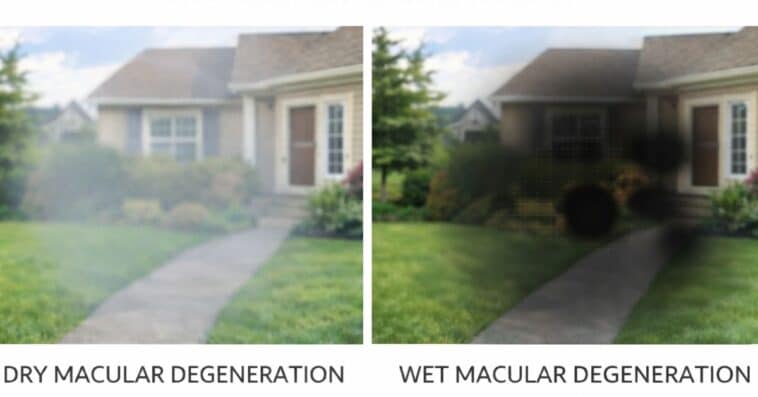
Age-related macular degeneration (AMD) is a condition that can cause vision loss, especially in older adults. Understanding the differences between wet and dry AMD can help you recognize symptoms early and get the care you need.
Read on to learn what AMD is, how it affects your vision, and what you can do about it.
What Is Age-Related Macular Degeneration
Age-related macular degeneration is an eye condition that damages the macula, most often due to aging.
- The term ‘age-related’ means this condition usually develops slowly as you get older. It is most common in people over 50, and your risk increases further after age 70.
- The macula is a small but very important area in the center of your retina. The retina is the light-sensitive layer at the back of your eye that helps you see.
- Degeneration means the tissue in your eye is slowly damaged or breaks down over time.
The macula is responsible for your central vision. Central vision is what you use to:
- Read and recognize letters.
- See faces clearly
- Drive safely
- Work on screens
- Perform detailed tasks like sewing or writing.
Macular degeneration usually does not affect your side (peripheral) vision. It can affect one eye more than the other.
There are two main types of age-related macular degeneration: dry AMD and wet AMD.
Wet vs. Dry Age-Related Macular Degeneration
Both wet and dry age-related macular degeneration affect the macula, but they differ in how quickly they progress, how severe they are, and how they are treated. The most common type is not always the most serious.
Dry macular degeneration usually develops slowly and may remain stable for years. Wet macular degeneration can cause sudden, serious changes in your central vision if left untreated.
The information below explains how wet and dry age-related macular degeneration differ in terms of their prevalence, causes, effects on vision, and management.
Knowing these differences can help you recognize warning signs early and understand why some types need regular monitoring while others need urgent treatment.
Frequency | ~90% of AMD cases | ~10% of AMD cases |
| Cause | Drusen (protein deposits) damage the macula | Abnormal blood vessels grow and leak |
| Speed of progression | Slow, often over years | Often rapid |
| Vision impact | May progress from mild changes to central vision loss | Always affects central vision |
| Advanced form | Geographic atrophy | Advanced by definition |
| Treatment | Lifestyle changes, vitamins, newer therapies for GA | Anti-VEGF injections |
| Urgency | Monitoring and prevention | Requires prompt treatment |
Dry Age-Related Macular Degeneration
Dry age-related macular degeneration is the most common type of AMD. About 9 out of 10 people with macular degeneration have the dry type.
Dry AMD develops when drusen, which are tiny deposits of protein and fat, build up under the macula. Over time, these deposits interfere with the retina’s function and damage the macula.
• Stages of Dry Macular Degeneration
Dry AMD usually develops in stages:
- Early stage: Drusen are present, but vision remains normal.
- Intermediate stage: Vision may become mildly blurred or less sharp.
- Advanced stage (geographic atrophy): Parts of the macula are lost, which can cause permanent loss of central vision.
Not everyone with dry AMD will progress through all of these stages.
Some people with dry AMD stay stable for many years, especially if they manage their risk factors.
• How Dry Macular Degeneration Is Managed
There is no cure for dry AMD, but you can often slow its progression.
Eye specialists commonly recommend:
- AREDS II supplements, containing vitamin C, vitamin E, zinc, copper, lutein, and zeaxanthin
- Eating a Mediterranean-style diet, which includes plenty of vegetables, fruits, fish, and healthy fats
- Avoiding smoking and staying away from secondhand smoke
- Wearing sunglasses that block UVA and UVB rays to protect your eyes from UV light
- Getting regular eye exams and imaging to monitor your eye health
New treatments are now available to help slow the progression of geographic atrophy, the advanced stage of dry AMD.
Wet Age-Related Macular Degeneration
Wet age-related macular degeneration, also called exudative AMD, is less common than dry AMD but is more serious.
✔ Why Wet AMD Happens
Wet AMD happens when abnormal blood vessels grow under the retina. These vessels can leak fluid or blood, causing swelling, scarring, and rapid loss of central vision.
Wet AMD is always considered an advanced form of macular degeneration. Dry AMD can be early or advanced.
✔ Symptoms of Wet Macular Degeneration
Wet AMD often causes sudden and noticeable changes in your vision. These may include:
- Sudden distortion of straight lines
- Dark or missing spots in central vision
- Rapid decline in reading vision
- Objects appearing bent or warped
✔ Treatment for Wet Macular Degeneration
Wet AMD is a serious condition, but new treatments have greatly improved the outlook for people with this disease.
The main treatment for wet AMD is anti-VEGF injections. These medicines can:
- Stop the growth of abnormal blood vessels.
- Reduce retinal swelling
- Help preserve vision and, in some cases, even improve it.
With early and regular treatment, many people with wet AMD can maintain their independence and useful vision for many years.
Can Dry Macular Degeneration Turn Into Wet?
Yes, dry macular degeneration can turn into wet macular degeneration, especially in the intermediate or advanced stages of the disease.
Dry AMD can also progress to advanced geographic atrophy without turning into wet AMD.
This is why it is important to have regular eye exams, even if you do not notice any symptoms or if your symptoms are only mild.
Why Regular Eye Exams Are Important
Macular degeneration can start before you notice any changes in your vision. Yearly eye exams help your eye doctor find early changes in your retina and start treatment right away if needed.
If you notice new distortion, blurred central vision, or dark spots, see your eye doctor as soon as possible.
Early intervention offers the best chance to protect long-term vision.
FAQ
Can vision be restored with wet macular degeneration?
Timely anti-VEGF treatment can help stabilize or slightly improve your vision, but it does not fully restore it. Early care can help you maintain your independence.
Which is worse to have: wet or dry macular degeneration?
Wet AMD is usually more severe because vision loss happens more quickly. Dry AMD progresses more slowly but can still cause vision loss over time.
How long does it take to go from dry to wet macular degeneration?
There is no set timeline. Some people never develop wet AMD, while others may develop it months or years later, especially in the later stages. If you notice sudden symptoms, you should get your eyes checked right away.
How many years does it take to go blind with macular degeneration?
Dry AMD progresses slowly over the years, while wet AMD can cause rapid vision loss in weeks or months if it is not treated. Most people lose central vision, not total sight, and prompt treatment helps preserve your vision.
How often do you need injections for wet macular degeneration?
Injection schedules depend on how you respond to treatment. They usually start monthly and are then adjusted as needed. Long-term monitoring is important to protect your vision.
Conclusion
Dry AMD is the more common type. It usually develops slowly and gets worse. Wet AMD is less common but can progress faster and harm your vision more quickly.
Wet AMD is less common but more aggressive. It can threaten your central vision much more quickly than dry AMD.
Both types affect your central vision and can make daily activities like reading, driving, or seeing faces more difficult.
Finding AMD early, making healthy lifestyle choices, and getting the right treatment can make a big difference in your outcome.
Wet AMD is less common but more aggressive. It can threaten your central vision much more quickly than dry AMD.
Both types affect your central vision and can make daily activities like reading, driving, or seeing faces more difficult.
Finding AMD early, making healthy lifestyle choices, and getting the right treatment can make a big difference in your outcome.
Understanding the difference between wet and dry age-related macular degeneration helps you take action early, when it matters most.