

Bilateral myopia is when both of your eyes are nearsighted. This means you may notice that things far away look blurry, but objects up close remain clear. Bilateral myopia can begin in childhood, the teenage years, or even adulthood, and it often gets worse slowly over time.
Causes of Bilateral Myopia
Bilateral myopia occurs when light entering your eyes focuses in front of the retina, rather than directly on it. This usually results from a combination of your eye’s shape and your genetic background.
The most common reason for bilateral myopia is that the eyeball grows longer than normal. This causes images to focus before they reach the retina, making distant objects appear blurry. This type of myopia often begins in childhood or the teenage years, when the eyes are still developing.
In some cases, the cornea or lens of the eye is more curved than usual. Even if the eyeball is not longer, this extra curvature bends light too much, leading to nearsightedness in both eyes.
The cornea and lens both help focus light onto the retina. If their shape or position is even slightly off, it can affect how light is focused, which may result in bilateral myopia.
Family history plays a significant role. If one or both parents are nearsighted, their children are more likely to develop bilateral myopia. Specific genes that influence eye growth and vision can increase this risk.
Symptoms of Bilateral Myopia
- Blurred distance vision, such as difficulty seeing road signs or classroom boards
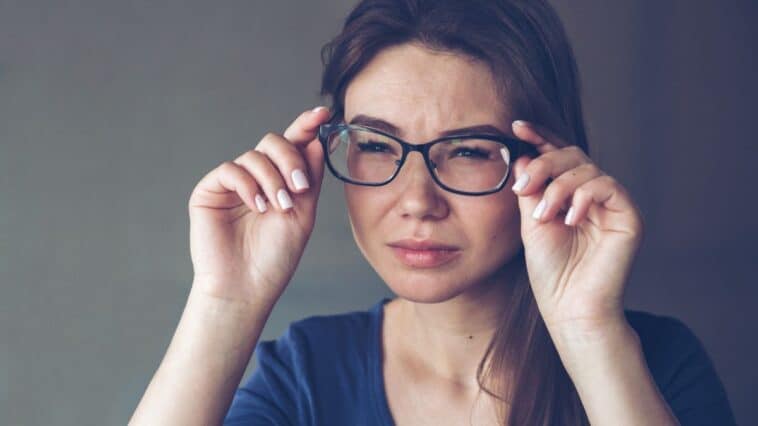
- Squinting to see objects more clearly
- Eye strain, especially after prolonged visual tasks
- You may also experience headaches when your eyes have to work harder to focus.
- Visual fatigue, leading to reduced concentration and comfort
Diagnosing Bilateral Myopia
Your eye doctor will use an eye chart to measure how clearly each of your eyes can see at various distances.
A refraction test helps determine the right prescription to correct your myopia. It also shows how nearsighted each of your eyes is.
Your eye doctor will examine the retina, optic nerve, and the inside of your eyes to check for other problems and to assess your overall eye health.
Sometimes, your doctor may use special eye drops to dilate your pupils. This allows them to see the retina more clearly, especially when examining children’s eyes.
In some cases, special imaging is used to measure the length of your eyes. This helps your doctor determine whether your myopia is worsening.
Treatment of Bilateral Myopia
There are several effective ways to manage and correct bilateral myopia. The best option for you will depend on your age, your lifestyle, how severe your myopia is, and the overall health of your eyes.
Eyeglasses are the most common and straightforward way to correct myopia. They help focus light onto your retina, making distance vision clearer in both eyes.
Contact lenses provide clear vision without the need for glasses. They can also improve your side vision. There are different types of contact lenses, including soft, hard, and specialty lenses.
Orthokeratology (Ortho-K) uses special contact lenses that you wear overnight. These lenses gently reshape your cornea while you sleep, so you can see clearly during the day without glasses or contacts. Ortho-K is sometimes used to help slow the progression of myopia in children.
Refractive surgery, such as LASIK or PRK, reshapes the cornea to permanently correct myopia. Surgery is usually considered only for adults whose vision has stabilized.
Variations and Related Forms of Myopia
- Unilateral vs. bilateral myopia, affecting one eye or both
- Unequal myopia, where each eye has a different prescription
- Progressive myopia, which worsens gradually over time
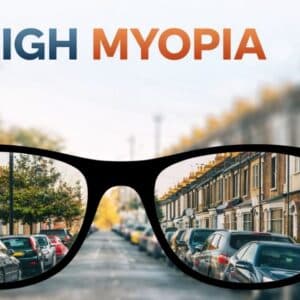
- High myopia is defined as a prescription of minus 6.00 diopters or higher.
- Pathologic myopia, associated with structural changes and a higher risk of complications
- Secondary myopia, caused by medications, trauma, or other medical conditions