


Contents
hide
Glaucoma is a major cause of irreversible blindness around the world. In the United States alone, more than 3 million people have glaucoma, and many do not know it.
One of the most concerning aspects of glaucoma is that most people are unaware they have the condition until vision loss has already started and cannot be restored.
According to the World Health Organization (WHO), glaucoma is the second most common cause of blindness in the world. Unlike cataracts, which can usually be treated to restore vision, vision lost from glaucoma cannot be recovered.
If glaucoma is found early, it can often be managed. Early treatment helps protect your vision and can prevent further vision loss.
This guide explains what glaucoma is, its early warning signs, risk factors, how it is diagnosed, and the available treatment options, including medications and surgery.
What Is Glaucoma?
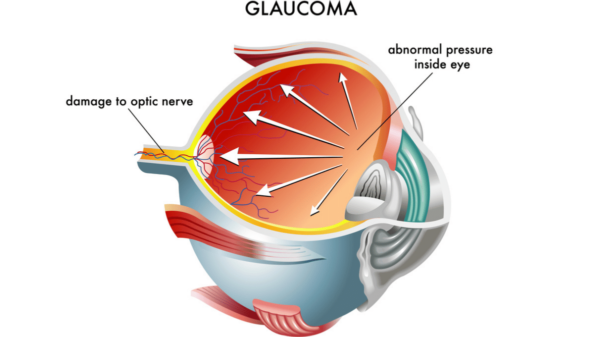
Glaucoma is not just one disease, but a group of eye conditions that can damage the optic nerve. The optic nerve is responsible for carrying visual information from your eye to your brain.
In many cases, damage to the optic nerve is related to increased pressure inside the eye. This pressure is called intraocular pressure, or IOP. However, it is important to know that glaucoma can also develop even when eye pressure is within the normal range.
The optic nerve contains over one million delicate nerve fibers. Once these fibers are damaged, they cannot grow back. This is why vision loss from glaucoma is permanent.
Glaucoma usually develops slowly and does not cause pain in the early stages. Because of this, it is sometimes called the silent thief of sight.
Why Glaucoma Is So Dangerous
Glaucoma often starts by affecting your peripheral vision. This is the part of your vision that lets you see objects to the side without turning your head. Central vision usually remains clear at first, so many people do not notice any changes.
Because these changes happen slowly and without pain, glaucoma can damage the optic nerve for years before symptoms are noticed. By the time vision changes become obvious, permanent nerve damage may have already occurred.
Without proper treatment, glaucoma can lead to:
- Gradual loss of side vision
- Tunnel vision in advanced stages
- Difficulty seeing in dim lighting
- Permanent and irreversible blindness
The American Academy of Ophthalmology (AAO) stresses that regular comprehensive eye exams are the only reliable way to detect glaucoma early, before vision loss becomes permanent.
By the time noticeable vision loss occurs, up to 40% of optic nerve fibers may already be damaged.
Symptoms of Glaucoma
Glaucoma often develops quietly, without pain or obvious symptoms. By the time you notice vision changes, permanent optic nerve damage may have already happened. This is why regular comprehensive eye exams are so important for early detection.
Early Stages (Most Common Type: Open-Angle Glaucoma)
Most people experience no noticeable symptoms at first.
As the disease progresses, you may notice:
- Loss of peripheral vision
- Difficulty adjusting to darkness
- Subtle blind spots
- Tunnel vision in advanced stages
Because these vision changes develop slowly, they are often easy to miss unless you have a comprehensive eye exam.
Acute Angle-Closure Glaucoma (Medical Emergency)
This less common type of glaucoma develops suddenly and requires immediate medical attention.
Symptoms may include:
- Severe eye pain
- Sudden blurred vision
- Headache
- Nausea or vomiting
- Halos around lights
- Red eye
Acute angle-closure glaucoma is a medical emergency. Immediate treatment is needed to prevent permanent vision loss.
Types of Glaucoma
Primary Open-Angle Glaucoma (Most Common)
Accounts for about 90% of cases.
In this type, the drainage system inside the eye becomes less efficient over time. This causes pressure to build up slowly, which can gradually damage the optic nerve.
In this type, the drainage system inside the eye becomes less efficient over time. This causes pressure to build up slowly, which can gradually damage the optic nerve.
Primary open-angle glaucoma develops very slowly, often over many years, without noticeable symptoms.
Angle-Closure Glaucoma
Occurs when the iris blocks the drainage angle of the eye.
When this happens, pressure inside the eye can rise quickly and may damage the optic nerve within a short period, sometimes in just hours or days.
When this happens, pressure inside the eye can rise quickly and may damage the optic nerve within a short period, sometimes in just hours or days.
This type of glaucoma requires emergency treatment to protect your vision.
Normal-Tension Glaucoma
Optic nerve damage occurs even though eye pressure measures within the normal range.
The exact cause of normal-tension glaucoma is not fully understood, but reduced blood flow to the optic nerve may be a contributing factor.
Congenital Glaucoma
A rare form present at birth caused by abnormal development of the eye’s drainage system.
Secondary Glaucoma
Secondary glaucoma develops as a result of another eye condition or health problem, such as:
- Eye injury
- Long-term steroid use
- Inflammation
- Advanced diabetes
- Previous eye surgery
What Causes Glaucoma?
Glaucoma most often develops when the drainage of fluid from inside the eye is abnormal.
Your eye constantly makes a clear fluid called aqueous humor. If this fluid cannot drain properly, pressure inside the eye can increase.
Risk factors include:
- Age over 60
- Family history of glaucoma
- African American, Hispanic, or Asian ancestry
- Thin corneas
- Diabetes
- High blood pressure
- History of eye trauma
- Long-term steroid use
Having one or more risk factors does not mean you will develop glaucoma. However, it does make regular eye exams especially important.
Is Glaucoma Hereditary?
Yes, glaucoma can run in families.
If your parent, brother, sister, or another close relative has glaucoma, your risk is much higher than someone without a family history.
Research shows that having a first-degree relative with glaucoma can increase your risk by up to 4 to 9 times, depending on the type of glaucoma. Primary open-angle glaucoma, the most common form, has a strong genetic component.
Having a family history of glaucoma does not mean you will develop it. Many people with a family history never do. However, you should have your eyes checked more often.
If glaucoma runs in your family:
- Start comprehensive eye exams earlier (often before age 40).
- Inform your eye doctor about your family history.
- Follow recommended screening intervals consistently.
Because glaucoma usually develops without symptoms, people with a family history get the most benefit from early and regular eye checks.
Early detection is the best way to prevent vision loss, especially if you have a family history of glaucoma.
How Glaucoma Is Diagnosed
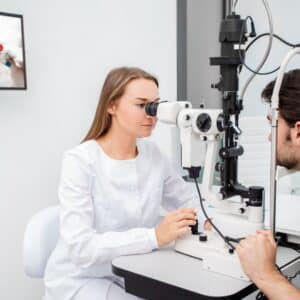
Glaucoma is not diagnosed with a single quick test. It usually takes a full eye exam and several specific measurements to understand what is happening inside your eye.
During a glaucoma evaluation, your eye doctor may perform:
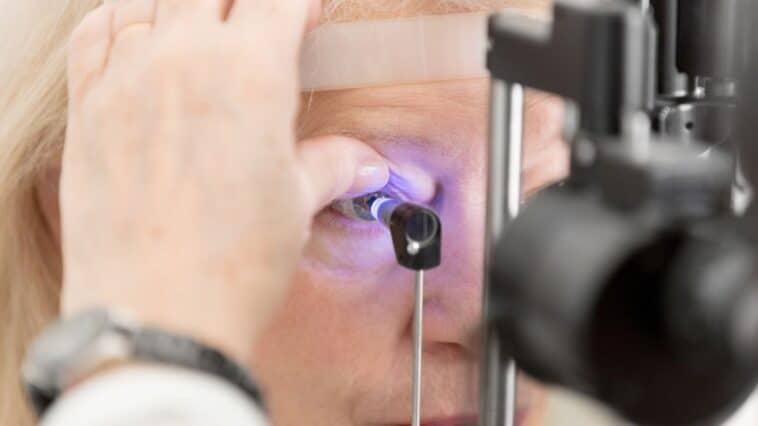
- Tonometry – to measure the pressure inside your eye
- OCT (Optical Coherence Tomography) – a painless scan that checks the thickness of your optic nerve fibers
- Visual field testing – to see if you’ve lost any side (peripheral) vision
- Gonioscopy – to examine how well fluid drains from your eye
- Dilated optic nerve exam – to look directly at the optic nerve for signs of damage
It is important to know that glaucoma is not diagnosed based on eye pressure alone. Some people have high pressure and never develop nerve damage. Others have normal pressure but still develop glaucoma.
This is why a comprehensive eye exam is important.
The earlier glaucoma is found, the better your chances of protecting your vision over time.
Glaucoma Treatment Options
The goal of treatment is simple:
Lower eye pressure and prevent further optic nerve damage.
While treatment cannot restore vision that has already been lost, it can help protect the vision you still have.
1. Prescription Eye Drops
Prescription eye drops are often the first treatment recommended for glaucoma.
Common classes include:
- Prostaglandin analogs
- Beta-blockers
- Carbonic anhydrase inhibitors
- Alpha agonists
These medications work by either reducing the amount of fluid the eye produces or by helping fluid drain out of the eye more effectively.
2. Laser Treatment
- Selective Laser Trabeculoplasty (SLT) – improves drainage.
- Laser Peripheral Iridotomy – used for angle-closure risk
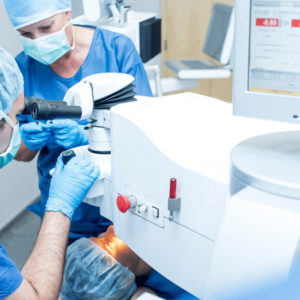
Laser procedures for glaucoma are usually performed in the eye doctor’s office. They may help lower eye pressure and can sometimes reduce the need for daily eye drops.
3. Minimally Invasive Glaucoma Surgery (MIGS)
Modern procedures that:
- Lower pressure
- Have a shorter recovery time.
- Often combined with cataract surgery.
These minimally invasive procedures are becoming more common, especially for people with early to moderate stages of glaucoma.
4. Traditional Glaucoma Surgery
For advanced cases:
- Trabeculectomy
- Glaucoma drainage implants
- Cyclophotocoagulation
These surgeries work by creating new pathways for fluid to drain from the eye or by reducing the amount of fluid the eye produces.
Surgery is typically recommended when medications and lasers are insufficient.
Can Glaucoma Be Prevented?
There is no guaranteed way to prevent glaucoma. However, you can reduce your risk and detect it early.
Protective steps include:
- Comprehensive eye exams every 1–2 years after age 40
- Regular exercise (may lower eye pressure)
- Managing diabetes and blood pressure
- Protecting eyes from injury
- Avoiding unsupervised steroid use
The most effective way to prevent vision loss from glaucoma is through early detection with regular eye exams.
Living With Glaucoma
Hearing you have glaucoma can be scary, and it is normal to feel anxious at first. The good news is that many people with glaucoma keep useful, independent vision for the rest of their lives, especially when it is found early and treated regularly.
Managing glaucoma is not a one-time treatment. It requires ongoing care.
Living well with glaucoma usually means:
- Taking your eye drops exactly as prescribed, every day.
- Attending regular follow-up appointments
- Monitoring changes in your optic nerve and visual field
- Being aware of overall health factors like blood pressure and medication use
Glaucoma usually does not affect how you feel day to day. This is why it is important to be consistent with treatment. Even when your vision seems stable, the disease can progress if treatment is not followed.
The earlier glaucoma is found, the better your long-term outlook. With regular care and working with your eye doctor, most people can protect their vision and continue normal daily activities.
When Should You See an Eye Doctor?
Glaucoma often develops quietly, without early warning signs. This is why regular eye exams are so important, especially if you have risk factors.
You should schedule a comprehensive eye exam if:
- You are over age 40
- Glaucoma runs in your family.
- You have diabetes or high blood pressure.
- You’ve noticed changes in your side vision.
- You experience sudden eye pain, blurred vision, or halos around lights.
Even if your vision feels normal, glaucoma can still be developing without your knowledge.
The good news is that vision loss from glaucoma can often be slowed and sometimes largely prevented — when the condition is detected and treated early. Regular exams are the most powerful step you can take to protect your sight.
Final Thoughts
Glaucoma is a serious eye condition, but it can be managed with proper care.
In most cases, glaucoma does not cause pain.
Glaucoma usually does not cause blurry vision in the early stages.
The condition often develops without obvious warning signs.
Glaucoma usually does not cause blurry vision in the early stages.
The condition often develops without obvious warning signs.
That is why regular eye exams are essential.
The most powerful protection against glaucoma-related blindness is early diagnosis and lifelong monitoring.
If you have risk factors or have not had a comprehensive eye exam in the past year, scheduling one could protect your vision for decades to come.