What Is High Myopia?
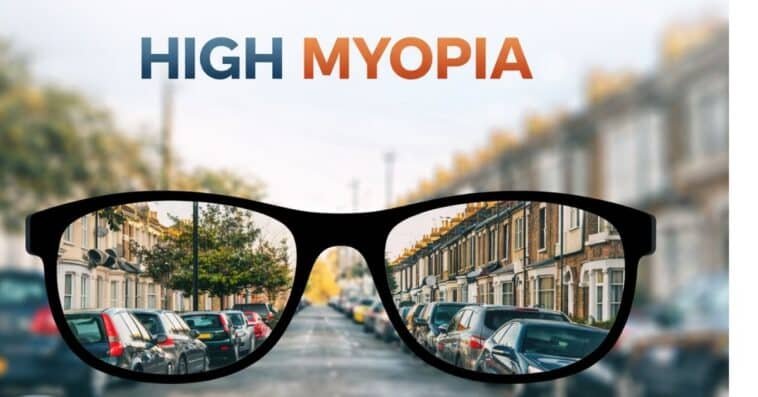
High myopia is a severe form of nearsightedness. With high myopia, things far away look blurry, even with glasses or contact lenses. This happens when the eye grows longer than normal.
Eye doctors diagnose high myopia if your glasses prescription is -6.00 diopters or higher. High myopia can also be diagnosed if your eyeball is longer than normal.

High myopia is different from mild or moderate myopia. It does more than just make vision blurry. High myopia can change the shape of the eye. It also raises the risk of serious eye diseases, especially as you get older.
Causes and Risk Factors of High Myopia
High myopia usually has multiple causes. It often results from a combination of genetics, early onset, and environmental factors.
Family history is important. Children with one or both parents who have high myopia are more likely to get high myopia too. Genes help decide how long the eye grows and how the white part of the eye, called the sclera, responds to growth.
- Prolonged near work (reading, studying, screens)
- Limited outdoor time during childhood
- High academic visual demands
Spending time outside in natural daylight can help slow down eye growth. This may help slow the progression of myopia, especially in children.
Complications Associated With High Myopia
Not everyone with high myopia will get these problems. But the risk is higher than for people with mild or moderate myopia.
High myopia raises the risk of several eye conditions over your lifetime. This is why regular eye checkups are important.
- Retinal tears
- Retinal detachment
Get eye care right away if you see sudden flashes of light, more floaters than usual, or a shadow in your vision. These can be signs of a retinal tear or detachment.
Changes can happen in the center of the retina, called the macula. In serious cases, this can cause permanent loss of central vision.
People with high myopia have a higher risk of glaucoma. This is partly because changes in the optic nerve are harder to find early.
High myopia is associated with earlier cataract development, often at a younger age than average.
How Is High Myopia Diagnosed
- Refraction testing (measuring prescription strength)
- Axial length measurement (eye length)
- Dilated retinal examination
- Optic nerve evaluation
Managing High Myopia
- High-index lenses make glasses thinner and lighter.
- Contact lenses can give clearer vision for people with high prescriptions.
- Low-dose atropine eye drops
- Multifocal soft contact lenses
- Orthokeratology (overnight corneal reshaping lenses)
These treatments work best when started early.
Lifestyle Habits That Support Eye Health
- Kids should spend time outside every day.
- When you’re doing close-up work, try the 20-20-20 rule: every 20 minutes, look at something 20 feet away for 20 seconds.
- Keep screens at a safe distance and sit up straight.
- Eat a balanced diet to help keep your eyes healthy.
Early Detection and Prevention
- Squint frequently
- Sit very close to the screens.
- Struggle to see distant objects.
FAQ
High myopia usually means a prescription of –6.00 diopters (D) or stronger, or an eye that’s much longer than normal. At this level, there’s a higher risk of eye problems.
No. High myopia refers to the degree of nearsightedness, while pathologic myopia describes progressive structural damage to the retina, optic nerve, or macula. Not everyone with high myopia develops pathological changes.
Yes. High myopia can continue to progress, especially if it begins in childhood or adolescence. Progression usually slows in adulthood, but regular eye exams are still important to monitor for complications.
Conclusion
High myopia is more than just strong nearsightedness. It is a lifelong eye condition that needs regular care and checkups.
With early detection, the right treatments, and regular eye exams, many people with high myopia can keep good vision and protect their eyes for life.