Macular degeneration is an eye disease that affects the retina. The retina is the layer of tissue at the back of your eye. Macular degeneration happens in a part of the retina called the macula. The macula helps you see things clearly and in detail.
When the macula is damaged, it can be hard to read, drive, recognize faces, or see small details.
Macular degeneration usually does not cause total blindness. But it is a leading cause of permanent loss of central vision, especially in people over age 50.
This guide explains macular degeneration in simple terms. You will learn about what causes it, the different types and stages, how it is diagnosed, treatment options, and ways to manage it.
Knowing about these topics can help you and your loved ones understand what to expect and how to take care of your vision.
Understanding the Macula and Central Vision
The retina is a thin, delicate layer that lines the back of your eye. It acts much like a camera sensor, capturing light and images and sending them to your brain through the optic nerve so you can see.
The macula is essential for several important visual tasks, including:
- Read the small print.
- Recognize faces
- Drive safely
- See colors and contrast clearly.
- Focus on fine details.
If the cells in your macula become damaged, you may notice that your central vision becomes blurry or distorted, or you might see missing spots in the center of your vision. Your peripheral (side) vision is usually not affected, so you can still see objects out of the corner of your eye.
What Is Macular Degeneration?
Macular degeneration happens when the cells in your macula, the part of your retina responsible for sharp, central vision, slowly stop working properly. As these cells become damaged, you may notice a gradual loss of your central vision over time.
This condition usually develops as people get older, which is why it is often called age-related macular degeneration, or AMD.
Macular degeneration is not just one disease. It is a term used for a group of changes that can happen in the retina. These changes may be caused by aging, family history, problems with blood vessels, or other factors.
What Causes Macular Degeneration?
Macular degeneration happens when the retina gets damaged over time. This damage can be caused by aging, genetics, or other health and lifestyle factors.
Aging is the main risk factor for macular degeneration. As you get older, the cells in your macula cannot repair damage or remove waste as well as they used to. This makes the macula more likely to break down. Macular degeneration is most common in people over age 50.
Genetics can also raise your risk. If someone in your family has macular degeneration, you are more likely to get it too. The traits you inherit can affect how well your retina handles stress as you get older.
Your lifestyle and health can affect your risk for macular degeneration. Smoking is a major risk because it lowers oxygen and blood flow to the retina. Health problems like high blood pressure, high cholesterol, and heart disease can also reduce blood flow to your eyes. Being overweight or having poor metabolic health can raise your risk even more.
Environmental factors can also raise your risk for macular degeneration. Spending a lot of time in sunlight or blue light without eye protection can strain your retina. Nutrition is important too. If you do not get enough antioxidants and other key nutrients in your diet, your retina may not be able to protect itself as well.
In rare cases, some inherited retinal diseases, such as Stargardt disease, can cause macular damage in children or young adults.
Having these risk factors does not mean you will definitely get macular degeneration. Many of these risks can be managed. You can lower your risk by quitting smoking, eating a healthy diet, protecting your eyes from too much light, and keeping your blood pressure and cholesterol at healthy levels.
Types of Macular Degeneration
There are two main types of macular degeneration, each affecting the eye differently and requiring different treatment approaches.
✔ Dry Macular Degeneration
It is characterized by:
- Gradual thinning of macular tissue
- Accumulation of drusen, small yellow deposits beneath the retina
- Vision loss that develops slowly over many years
Many people with early dry macular degeneration have few or no symptoms at first. However, the condition can gradually worsen over time.
✔ Wet Macular Degeneration (Neovascular)
Wet macular degeneration is less common than the dry type, but it is more serious and can cause vision loss much more quickly.
It occurs when:
- Abnormal blood vessels grow beneath the retina.
- These vessels leak fluid or blood.
- Retinal cells are rapidly damaged.
Vision loss from wet macular degeneration can happen suddenly, sometimes within just a few days or weeks. This type requires urgent medical attention to help protect your vision.
It is important to know that dry macular degeneration can turn into the wet form at any stage.
Stages of Age-Related Macular Degeneration
AMD typically progresses through three clinical stages:
✔ Early Stage
- Small drusen present
- No noticeable vision changes
- Detected only during eye examinations
✔ Intermediate Stage
- Larger drusen and pigment changes
- At this stage, you may start to notice subtle changes in your vision.
- Higher risk of progression
✔ Late (Advanced) Stage
- Severe central vision loss
- Geographic atrophy (advanced dry AMD) or wet AMD
- Vision loss at this stage is usually permanent and irreversible.
Who Is at Risk of Macular Degeneration?
People with increased risk include:
- Adults over 50
- Smokers or former smokers
- Individuals with a family history of AMD
- Those with cardiovascular disease
- People with obesity
- Individuals with light-colored eyes
- Women (partly due to longer life expectancy)
- People with long-term UV exposure
- Diets high in saturated fats and processed foods
Symptoms of Macular Degeneration
Macular degeneration is an eye disease that affects the center of your vision. The symptoms can be different for each person. Often, the changes happen slowly. You might not notice any symptoms at first.
As macular degeneration gets worse, your central vision may become blurry or less clear. It can be hard to see details. Straight lines might look wavy or bent. This can happen when you read or look at things like door frames or window edges. You may find it harder to read small print or recognize faces.
Some people see a dark, gray, or empty spot in the center of their vision. Others notice that objects look faded or are hard to tell apart from the background. Vision problems can be worse in low light. Colors may not look as bright as they used to.
Early macular degeneration may not cause any symptoms. Many people do not know they have it until an eye doctor finds it during a regular eye exam. Regular eye exams are important, especially after age 50.
How is Macular Degeneration Diagnosed?
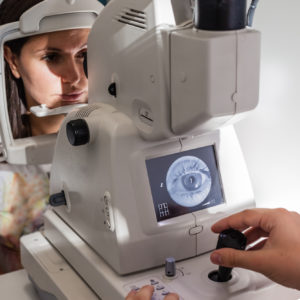
Diagnosing macular degeneration requires a full eye exam. This may include:
- Visual acuity testing
- Dilated retinal examination
- Amsler grid testing for distortion
- Optical Coherence Tomography (OCT) is a special scan that gives detailed images of your retina.
- Fluorescein angiography to detect leaking blood vessels
- Indocyanine green angiography in selected cases
If your eye doctor detects macular degeneration early, they can monitor it closely and start treatment if needed.
Treatment of Macular Degeneration
➤ Is There a Cure?
There is currently no cure for macular degeneration. However, treatment can help slow the progression of the disease and help protect the vision you still have.
➤ Management of Early and Intermediate Dry AMD
- Nutrient-rich diet (leafy greens, fish, antioxidants)
- AREDS-based supplements for appropriate patients
- Smoking cessation
- Blood pressure and cholesterol control
- Regular eye exams to check for changes
➤ Treatment of Wet Macular Degeneration
✔ Anti-VEGF Injections
- First-line treatment
- Blocks abnormal blood vessel growth
- Given as regular intravitreal injections
- These injections can help stabilize your vision, and for some people, they may even lead to some improvement.
✔ Photodynamic Therapy
- Uses light-activated medication
- Reserved for selected cases
✔ Laser Therapy
- Less commonly used today.
- Targets abnormal vessels in specific situations
Getting treatment as early as possible can make a big difference in preserving your vision.
Living With Macular Degeneration
For advanced disease, low-vision rehabilitation plays a key role:
- Magnifying devices and electronic aids
- Improved lighting strategies
- High-contrast reading tools
- Vision rehabilitation training
Most people with macular degeneration keep their peripheral (side) vision. There are many strategies and tools that can help you make the most of your vision.
Key Facts About Macular Degeneration
- Age-related macular degeneration, or AMD, is the leading cause of central vision loss in older adults.
- There are two main types of AMD. Dry AMD is more common. Wet AMD is less common but can cause vision loss more quickly.
- Smoking increases the risk of developing AMD.
- Finding AMD early can help preserve vision.
- Researchers are studying new treatments for AMD.
When Should I See an Eye Doctor?
- If you notice any changes in the center of your vision, even small ones, make an appointment for an eye exam. You might see things look blurry or wavy. Maybe straight lines look bent, or you have trouble reading or recognizing faces. These can be early signs of eye problems that need to be checked out right away.
- Eye exams are more important as you get older, especially after age 50. You need regular eye care even more if you smoke, have a family history of macular degeneration, or have high blood pressure or heart disease. Finding eye problems early can help protect your vision and stop more problems from happening.
- You might not notice symptoms when macular degeneration first starts. But a full eye exam can find changes before you notice them. If your doctor finds a problem early, they can watch your eyes closely and start treatment if you need it. This can help protect your vision and lower the chance of sudden changes.
- If your vision suddenly changes or gets worse fast, call your eye doctor or get medical help right away. Acting quickly can help fix serious eye problems and protect your sight.
FAQ
Does macular degeneration cause blindness?
Macular degeneration does not usually cause complete blindness. It mostly affects central vision. Most people keep their side vision. But losing central vision can make it hard to do daily tasks.
What are the early signs of macular degeneration?
Early macular degeneration often does not cause symptoms. When symptoms do happen, you might notice blurry vision in the center, trouble reading, straight lines that look wavy, or needing more light to see.
How often should I have an eye exam if I have macular degeneration?
Most people with macular degeneration need a full eye exam at least once a year. Your eye doctor might want to see you more often if your condition is more serious.
Does macular degeneration affect both eyes?
Macular degeneration often happens in both eyes. One eye can be worse than the other, especially at first.
Conclusion
Macular degeneration is a disease that often gets worse over time. There are treatments that can help manage it. If it is found early, the right treatment and healthy habits can help many people keep their vision and stay independent for a long time.
If you are over 50 or have risk factors for macular degeneration, regular eye exams can help protect your vision.