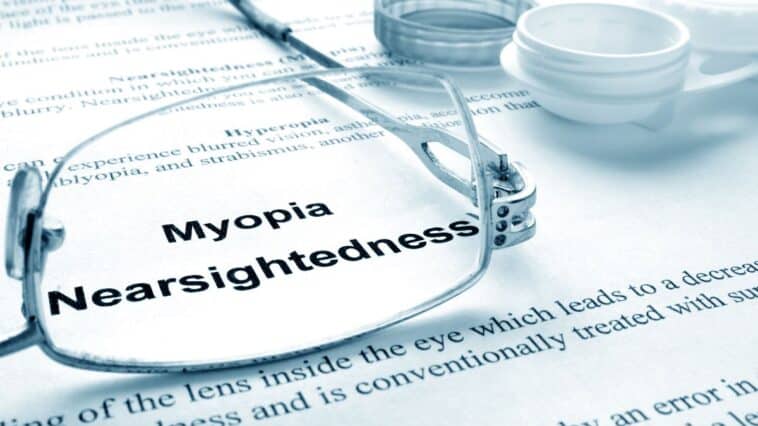
Nearsightedness, also called myopia, is a common vision condition that can affect people of all ages. It is becoming more common, especially in children and young adults. If you are nearsighted, you can see objects that are close to you clearly, but things that are farther away, like road signs or classroom boards, may look blurry.
Learning how nearsightedness develops, how it affects your vision, and what you can do to manage or treat it is an important part of protecting your long-term eye health.
What Is Nearsightedness?
Nearsightedness is a type of refractive error. This means the eye does not focus light correctly. In a nearsighted eye, light rays focus in front of the retina instead of directly on it. This causes objects that are far away to appear blurry.
This usually happens because:
- The eyeball is longer than normal, or
- The cornea is too steeply curved.
Myopia can be mild, moderate, or severe. It often starts in childhood and may get worse during the teenage years as the eyes grow. For many people, nearsightedness becomes stable in adulthood, but some may notice changes in their vision as they get older.
How Nearsightedness Affects Vision
If you are nearsighted, you may have trouble seeing things that are far away, such as signs or faces across a room. Reading or using a phone up close usually stays clear.
Common challenges include:
- Blurry road signs while driving
- Difficulty seeing the board at school
- Difficulty recognizing faces from far away.
- Eye strain or squinting when trying to focus on far objects
If nearsightedness is not corrected, it can cause eye strain and headaches. It can also make daily activities more difficult. This is especially important for children, since their vision is still developing. Untreated myopia can make it harder to learn and take part in everyday activities.
Signs and Symptoms of Nearsightedness
Nearsightedness often develops slowly, and the signs can be easy to miss at first. Watch for the following symptoms:
- Blurry vision when looking at distant objects
- Squinting to see more clearly
- Headaches, especially after visual tasks
- Eye strain or tired eyes
- Sitting closer to the TV or holding devices very close
- Difficulty driving at night
- Poor school performance due to difficulty seeing the board.
If you or your child notices any of these symptoms, schedule a comprehensive eye exam. Early detection and treatment of nearsightedness can help protect your vision and prevent more serious problems in the future.
What Causes Nearsightedness?
Nearsightedness can develop because of both genetic and environmental factors.
Genetic factors
If one or both parents are nearsighted, their children have a higher risk of developing myopia. Certain genes that affect eye growth and the retina are linked to nearsightedness.
Environmental and lifestyle factors
Lifestyle habits are also important in the development of nearsightedness, especially in children:
- Excessive near work (reading, tablets, phones)
- Prolonged screen time
- Limited outdoor exposure
- Poor visual breaks during close work
Studies show that children who spend more time outdoors have a lower risk of their myopia getting worse. Outdoor activities provide greater exposure to natural light and encourage looking at objects farther away.
Treatment Options for Nearsightedness
Nearsightedness cannot be cured, but it can be corrected with glasses or contact lenses. For many people, especially children, there are also ways to slow its progression and help protect long-term vision.
Eyeglasses
Eyeglasses are the most common and safest way to correct nearsightedness. The lenses help focus light onto the retina, allowing you to see clearly.
Contact lenses
Contact lenses are another option to correct nearsightedness if you prefer not to wear glasses. There are several types, depending on your needs:
- Soft lenses
- Rigid gas permeable lenses
- Multifocal myopia-control lenses
Orthokeratology (Ortho-K)
Special rigid contact lenses, worn overnight, can gently reshape the cornea. This process is called orthokeratology, or Ortho-K. It allows for clear vision during the day without the need for glasses or contact lenses.
Ortho-K can also help slow the progression of myopia in children, helping to protect their vision as they grow.
Refractive surgery
Procedures such as
LASIK or PRK can permanently reshape the cornea to correct nearsightedness. These surgeries are usually recommended for adults whose vision has remained stable for at least one year.
Myopia control strategies (children)
To slow progression:
- Increased outdoor time
- Myopia-control contact lenses
- Low-dose atropine eye drops
- Proper screen habits and breaks
Your eye doctor can help you choose the best treatment for you or your child, taking into account your age, your prescription, and your daily activities.
Can Nearsightedness Lead to Blindness?
Mild or moderate nearsightedness rarely leads to serious vision loss. However, people with high myopia are at greater risk for developing more serious eye problems, such as:
- Retinal detachment
- Myopic macular degeneration
- Glaucoma
- Early cataracts
Regular eye exams are important for detecting these problems early and protecting your vision over time.
Can Phones and Screens Cause Nearsightedness?
Phones and
screens do not directly cause nearsightedness. However, spending long periods focusing on screens up close is linked to worsening myopia, especially in children.
Key risk factors include:
- Long periods of near focus
- Lack of visual breaks
- Reduced outdoor activity
To help protect your eyes and lower the risk of myopia progression:
- Follow the 20-20-20 rule.
- Encourage outdoor play
- Maintain proper screen distance.
- Limit recreational screen time.
Does Nearsightedness Get Worse With Age?
For most people, nearsightedness worsens during childhood and the teenage years, then stabilizes in early adulthood.
- However, people with high myopia may continue to experience changes in vision over time.
- Adults may also notice changes in their vision over time due to eye strain or the natural aging process.
- After age 40, presbyopia, which is age-related difficulty seeing up close, can develop along with myopia.
Regular eye exams are important for detecting early vision changes and making sure you receive the right care.
Conclusion
Nearsightedness is a common vision condition, but it can be managed effectively. With early diagnosis, proper correction, and healthy visual habits, most people with myopia can maintain clear vision and a good quality of life.
For children, early treatment and myopia control strategies can help lower the risk of future vision problems. For adults, regular eye care is important to help prevent complications from more severe myopia.
If you or your child notices signs of blurry distance vision, schedule a comprehensive eye exam with your eye doctor. Taking action early can make a significant difference in protecting your vision for life.
FAQs
What are the first signs of nearsightedness?
Early signs of nearsightedness include blurry distance vision, squinting to see far away, headaches, eye strain, and difficulty seeing road signs, classroom boards, or television screens.
Is nearsightedness dangerous for the eyes?
Mild nearsightedness is usually not harmful, but severe myopia increases the risk of retinal detachment, glaucoma, macular degeneration, and early cataracts if left untreated.
Can nearsightedness improve naturally?
Nearsightedness does not usually improve on its own. However, myopia progression can be slowed in children with treatments such as atropine eye drops, Ortho-K lenses, and increased time spent outdoors.
At what age does nearsightedness usually start?
Nearsightedness often begins in childhood or early adolescence and may get worse until the late teenage years, when eye growth becomes stable.
How often should someone with nearsightedness get eye exams?
Children with myopia should have eye exams every 6 to 12 months. Adults should have an eye exam at least once a year, or as recommended by their eye doctor.
Can nearsightedness lead to blindness?
Nearsightedness itself does not cause blindness, but severe or untreated high myopia can lead to serious eye conditions that may threaten vision if not managed