



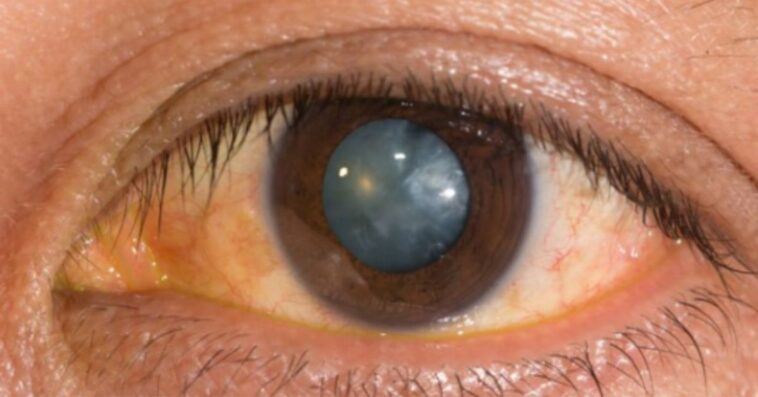
What Is a Nuclear Cataract?

- Yellow or brownish
- Dense and stiff
- Less transparent
Main Causes of Nuclear Cataracts
Nuclear cataracts usually form slowly over time, mainly due to natural changes in the lens as you age. While aging is the most common cause, other factors can sometimes lead to cataracts developing earlier.
1. Natural Aging
As you get older, the proteins inside your lens slowly change. Over time, these proteins may clump together, leading to a cloudy lens center.
2. Genetics
Some people are more likely to develop nuclear cataracts at a younger age if they have a family history of the condition.
3. Long-Term UV Exposure
Exposure to sunlight for many years, especially without eye protection, can damage the lens. Wearing sunglasses that block UV rays is an important way to help lower this risk.
4. Smoking
Smoking increases oxidative stress in the lens and is strongly linked to earlier and more aggressive nuclear cataract formation.
5. Certain Medical Conditions
- Diabetes and high blood pressure
- Obesity
can increase your risk by affecting how the lens functions.
6. Long-Term Steroid Use
Using steroids for a long time, whether taken by mouth, inhaled, or applied to the skin, can make cataracts more likely.
7. Eye Trauma
Symptoms of a Nuclear Cataract
- Blurred or cloudy vision
- Difficulty seeing distant objects
- Faded colors or yellow-tinted vision
- Increased glare, especially from headlights at night
- Reduced contrast sensitivity
- Needing extra light for reading or household tasks
- Temporary improvement in near vision: called “second sight
How Eye Doctors Diagnose Nuclear Cataracts
Visual acuity testing
Slit-lamp examination
Dilated eye exam
Treatment Options for Nuclear Cataracts
Currently, there are no eye drops, supplements, or medicines that can reverse a nuclear cataract. Surgery is the only proven treatment when your vision makes daily activities difficult.
When Is Surgery Needed?
- Vision becomes blurry or dim.
- You struggle with night driving.
- Glare makes it difficult to see clearly.
- Reading or daily tasks require extra light.
- Activities like cooking, driving, or work become harder.
You do not have to wait until the cataract becomes very advanced before considering surgery. Modern cataract surgery is safe and effective, even in the earlier stages.
How Cataract Surgery Works
- During surgery, the cloudy lens is broken into small pieces using ultrasound, a process called phacoemulsification.
- These fragments are then gently removed from the eye.
- A clear artificial lens, called an intraocular lens (IOL), is then implanted into the lens capsule.
Most cataract surgeries take about 10 to 20 minutes, and patients are usually able to go home within an hour.
Types of Intraocular Lenses (IOLs)
- Monofocal IOLs – clear vision at one distance (usually far)
- Toric IOLs – correct astigmatism
- Multifocal / Trifocal IOLs – provide multiple distances (far, intermediate, near)
- Extended-Depth-of-Focus (EDOF) lenses – a continuous range of vision
Can Nuclear Cataracts Be Prevented?
Protect your eyes from UV light.
Wearing sunglasses that block UV-400 and a wide-brimmed hat when you are outside can help shield your eyes from harmful rays.
Quit smoking
Quitting smoking helps reduce damage to the lens and lowers your risk of cataracts.
Eat a lens-healthy diet.
- leafy greens
- citrus fruits
- nuts and seeds
- carrots
- fish high in omega-3
Manage chronic health conditions.
Make sure diabetes and high blood pressure are well managed.
Limit alcohol consumption
Excessive alcohol consumption increases nuclear cataract risk.
Schedule regular eye exams.
When Should You See an Eye Doctor?
- Blurry or cloudy vision
- Increasing glare or trouble driving at night
- Colors appearing dull or yellowish
- Difficulty reading or needing brighter light
- Vision that changes rapidly
Conclusion
FAQ
1. Is a nuclear cataract the same as an age-related cataract?
2. Why does my vision sometimes seem better up close, with a nuclear cataract?
As the center of the lens becomes denser, it can temporarily cause a shift toward nearsightedness. This means your near vision may seem clearer for a short time before your overall vision gets worse.
3. Does nuclear cataract affect both eyes at the same time?
Often, yes. Nuclear cataracts usually develop in both eyes, although one eye may become worse more quickly than the other.
4. Can nuclear cataracts turn brown or yellow over time?
5. Are premium IOLs a good option for nuclear cataract surgery?