

Contents
hide
Age-related macular degeneration (AMD) is a progressive eye disease that affects the macula. The macula is the part of your retina responsible for sharp, clear vision.
AMD is the leading cause of permanent central vision loss in people over age 50 in developed countries.
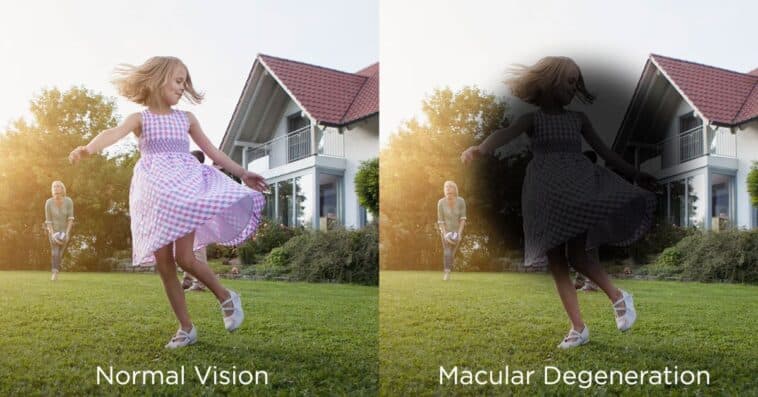
AMD does not cause total blindness. But it can make it much harder to do things that need central vision. These include reading, driving, seeing faces, and doing tasks that need you to see fine details.
What Does the Macula Do?
The macula is responsible for helping you:
- See fine details clearly.
- Read the small print.
- Recognize faces
- Drive safely
- Distinguish colors and contrast.
If the macula is damaged, your central vision can become blurry or distorted. Your side (peripheral) vision usually stays normal.
Types of Age-Related Macular Degeneration
There are two main types of AMD. Each type develops in a different way and has its own risks.
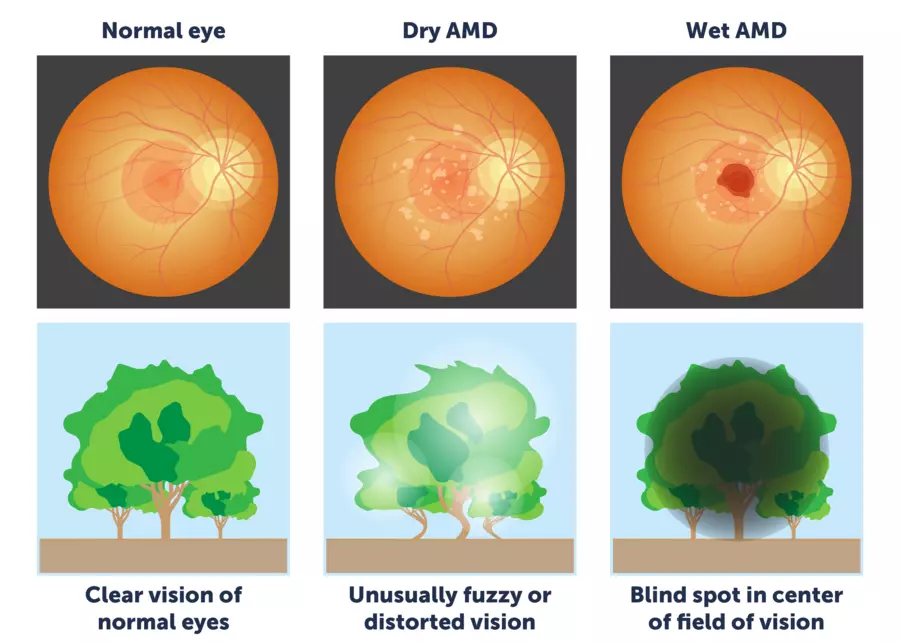
✔ Dry Macular Degeneration
- Dry AMD is the most common type. It makes up about 80 to 90 percent of all AMD cases.
- Dry AMD happens when the tissue in the macula gets thin. Yellow deposits called drusen build up under the retina.
- Vision loss from dry AMD usually occurs gradually over time.
- Sometimes, dry AMD can get worse. It can reach an advanced stage called geographic atrophy. In this stage, parts of the retina stop working.
✔ Wet Macular Degeneration
- Wet AMD is less common than dry AMD, but it often causes more severe vision loss.
- Wet AMD happens when abnormal blood vessels grow under the retina. These blood vessels can leak fluid or blood.
- Wet AMD can cause sudden and rapid loss of central vision.
- It is important to get treatment quickly for wet AMD. Treatment may help prevent more vision loss.
Dry AMD can turn into wet AMD at any stage, so it is important to monitor your eyes regularly.
Early and Advanced Symptoms of AMD
AMD often develops without any noticeable symptoms, especially in the early stages.
Common symptoms of AMD include:
- Blurred or distorted central vision
- Straight lines appearing wavy (metamorphopsia)
- Difficulty reading or recognizing faces
- Dark or empty spot in the center of vision (central scotoma)
- Reduced contrast sensitivity
- Difficulty adapting to low-light environments
- Colors appear faded or less vivid.
These symptoms can affect one or both eyes. They often get worse as AMD progresses.
Causes and Risk Factors of Age-Related Macular Degeneration
Age-related macular degeneration (AMD) develops due to a combination of factors, including your genetic makeup, your environment, and the choices you make in your daily life.
What are the major risk factors for AMD?
- Age – The risk of developing AMD increases significantly after the age of 50.
- Family history and genetics – Having a close relative with AMD or certain genetic factors can increase your risk.
- Smoking (the strongest modifiable risk factor)
- Obesity – Being overweight or obese may increase your risk of developing AMD.
- High blood pressure and cardiovascular disease – These conditions can affect the blood vessels in your eyes and raise your risk for AMD.
- High cholesterol – Elevated cholesterol levels may contribute to the development of AMD.
- Long-term UV light exposure
- Poor diet (low in antioxidants and omega-3s)
Having one or more risk factors does not mean you will definitely get AMD. Managing your risk factors can help slow the progression of the disease.
How Is Age-Related Macular Degeneration Diagnosed?
Your eye doctor can find AMD during a full eye exam. This exam may include tests to check your vision and look for changes in the retina.
- A visual acuity test checks how clearly you can see.
- A dilated fundus exam lets your doctor look directly at the macula, which is the part of the retina needed for sharp vision.
- An Amsler grid test can show if you have any wavy lines or missing spots in your central vision.
- Optical coherence tomography, or OCT, takes detailed pictures of the layers of your retina.
- Fluorescein angiography is a test that can find abnormal blood vessels that may be leaking in the retina.
- Indocyanine green angiography is another test that looks at the deeper blood vessels under the retina.
OCT is now the main test used to find and follow AMD.
Treatment Options for Age-Related Macular Degeneration
✔ Dry AMD
While there is currently no cure for dry AMD, there are steps you can take to help slow its progression and protect your vision.
- Taking AREDS-based nutritional supplements as recommended by your eye doctor can help support your eye health.
- Quitting smoking is important, as smoking increases the risk of AMD and can make the condition worse.
- Eating a healthy diet that includes plenty of leafy green vegetables and foods rich in omega-3 fatty acids can help support your eye health.
- Regular eye exams and monitoring are important to track any changes in your vision and catch problems early.
✔ Wet AMD
Wet AMD requires prompt treatment to help preserve your vision. Your eye doctor may recommend one or more of the following treatment options:
- Anti-VEGF injections (first-line therapy)
- Laser therapy may be used in certain cases to target and seal abnormal blood vessels in the eye.
- Photodynamic therapy is another option, though it is used less often today. This treatment uses a special light and medication to treat abnormal blood vessels.
Getting treatment early can make a big difference in keeping your vision.
Preventing or Slowing the Progression of AMD
You cannot always prevent AMD, but you can take steps to slow it down.
- Quit smoking. Smoking increases your risk of AMD.
- Keep a healthy weight. This can help lower your risk.
- Eat foods that are rich in antioxidants. These foods can help protect your eyes.
- Protect your eyes from UV light by wearing sunglasses when you are outside.
- Manage your blood pressure and cholesterol. This helps keep your eyes healthy.
- Exercise regularly. Physical activity is good for your overall health and your eyes.
- Have regular eye exams. These exams can help find AMD early.
Making healthy lifestyle changes is especially helpful if you have early or intermediate AMD. These changes can help protect your vision.
Living With Age-Related Macular Degeneration
If you have advanced AMD, low-vision rehabilitation can help you stay independent. It can also help you keep your quality of life.
- Magnifying devices can help you see things more clearly.
- High-contrast reading aids make words stand out, making them easier to read.
- Electronic visual aids use technology to help you see better.
- Adaptive lighting means using special lights to make it easier to see.
- Vision rehabilitation programs
Even with advanced AMD, you usually keep your side vision. With training and support, you can learn how to use the vision you have left.
Key Facts About Age-Related Macular Degeneration
- AMD is a common eye disease. It affects millions of people around the world.
- AMD is the main cause of central vision loss in people over age 50.
- There are two main types of AMD: dry and wet. Wet AMD often causes vision loss that occurs more rapidly and is more severe than dry AMD.
- Smoking is one of the biggest risk factors for getting AMD.
- Women are slightly more likely to develop AMD than men.
- Finding AMD early can improve your chances of keeping your vision.
- Ongoing research continues to look for new and better treatments for AMD.
FAQ
Is age-related macular degeneration curable?
AMD is not curable. However, treatments can help slow the progression of the disease and help preserve your vision.
AMD is not curable. However, treatments can help slow the progression of the disease and help preserve your vision.
Does AMD cause total blindness?
No, AMD does not cause total blindness. Most people keep their peripheral vision, even if central vision is affected.
No, AMD does not cause total blindness. Most people keep their peripheral vision, even if central vision is affected.
Can dry AMD turn into wet AMD?
Yes, dry AMD can turn into wet AMD. If this happens, it is important to get treatment as soon as possible.
Yes, dry AMD can turn into wet AMD. If this happens, it is important to get treatment as soon as possible.
How often should I have my eyes checked if I have AMD?
You should have your eyes checked at least once a year if you have AMD. Your eye doctor may recommend more frequent visits based on your condition.
You should have your eyes checked at least once a year if you have AMD. Your eye doctor may recommend more frequent visits based on your condition.
Final Medical Advice
Age-related macular degeneration is a long-term condition, but it can be managed.
Early diagnosis, regular eye exams, healthy lifestyle choices, and proper treatment can all help you keep your vision and maintain your quality of life.
Early diagnosis, regular eye exams, healthy lifestyle choices, and proper treatment can all help you keep your vision and maintain your quality of life.
If you are over 50 or have a family history of AMD, it is very important to get regular eye exams to protect your vision.