Your eyesight affects almost everything you do each day. You use your vision to work, read, drive, learn, and interact with others. If you notice any changes in your vision, even small ones, it can be an early sign that your eyes need care.
If you are unsure about when to see an optometrist, this guide explains the signs to watch for, common eye problems, and what to expect during an eye exam. The goal is to help you protect your vision and address problems early.
What Does an Optometrist Do?
An optometrist is a licensed eye care professional who examines your eyes, diagnoses vision and eye health problems, and manages the most common conditions. They can prescribe glasses or contact lenses, treat eye infections, help manage long-term eye diseases, and refer you to an ophthalmologist if you need surgery.
They are often the first specialists to detect:
- Glaucoma
- Cataracts
- Diabetic eye disease
- Macular degeneration
- Dry eye
- Eye infections
- Refractive errors (myopia, hyperopia, astigmatism, presbyopia)
Regular eye exams can find problems early, often before you notice any symptoms.
The Top Signs You Need to See an Optometrist
Some symptoms may seem minor at first, but they can be signs of an underlying eye problem. Here are some signs you should not ignore:
Blurry or Distorted Vision
If you notice that things look blurry, whether they are far away or up close, your vision may be changing. Common causes include:
- Nearsightedness (myopia)
- Farsightedness (hyperopia)
- Astigmatism
- Early presbyopia
A slow change in vision can feel normal, so many people delay getting an exam. Early treatment can help prevent eye strain and headaches.
Eye Pain, Discomfort, or a Pressure Sensation
Eye pain, whether sharp, dull, or pressure-like, should not be ignored.
It may come from simple dryness or strain, but it can also be an early sign of:
- Glaucoma
- Uveitis
- Corneal irritation or infection
- Severe dry eye
- Uncorrected refractive errors
If you have sudden eye pain, worsening pain when you move your eyes, or pain with redness or blurred vision, schedule an eye exam as soon as possible.
Changes in Peripheral
A slow loss of side vision is easy to miss. Many people do not notice it until it is more advanced.
This warning sign is often linked to:
- Glaucoma (the most common cause)
- Optic nerve disorders
- Neurological conditions
- Retinal disease
Once side vision is lost, it usually does not come back. Finding the problem early can help protect your vision, so this symptom should always be checked.
Flashes of Light or Sudden Floaters
If you see flashes of light, dark spots, cobweb shapes, or a sudden increase in floaters, it may be a sign of:
- Retinal tear
- Retinal detachment
- Posterior vitreous detachment
Retinal detachment is a serious medical emergency. If you notice flashes of light or sudden new floaters, get care from an eye doctor right away.
Noticeable Redness, Color Changes, or Swelling
Any sudden change in how your eyes look, especially if you also have discharge, sensitivity to light, or pain, may be a sign of:
- Conjunctivitis
- Allergic reactions
- Uveitis
- Corneal inflammation
- Eye infections
Getting your eyes checked quickly can help prevent complications and protect your vision.
Common Eye Conditions an Optometrist Can Detect Early
Many vision problems develop without symptoms. Regular eye exams help your optometrist detect and treat problems early, when treatment is most effective.
Here are some of the most frequent conditions they manage:
Myopia (Nearsightedness)
Trouble seeing far-away objects clearly.
Hyperopia (Farsightedness)
Difficulty focusing on near tasks such as reading.
Astigmatism
Astigmatism causes blurred or distorted vision because the front of the eye (the cornea) is not perfectly round.
Presbyopia
Presbyopia is when it becomes harder to read up close as you get older.
Dry Eye Syndrome
Dry eye syndrome can cause burning, gritty, or watery eyes when your tears do not keep your eyes moist enough.
Glaucoma
Glaucoma is damage to the optic nerve, often without symptoms in the early stages.
Cataracts
Cataracts occur when the natural lens of the eye becomes cloudy, leading to blurred or dim vision.
Macular Degeneration
Macular degeneration affects your central vision. Finding it early is important for treatment.
Conjunctivitis
Conjunctivitis causes red, irritated eyes and can be due to infection or allergies.
What an Optometrist Does During an Eye Exam
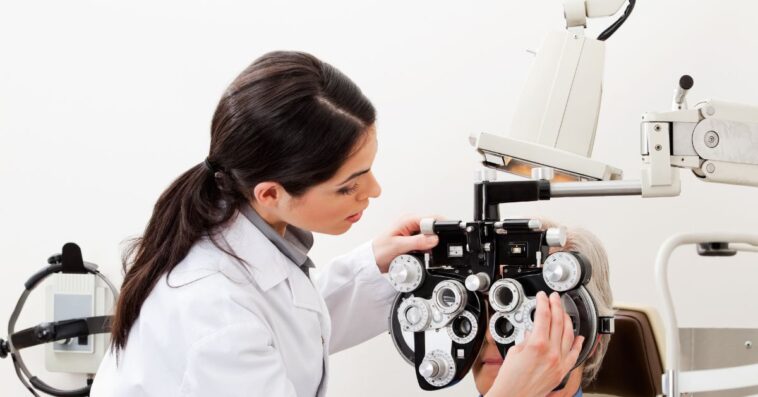
A routine eye exam does not hurt and gives your optometrist a complete view of your eye and vision health.
Here’s what you can expect:
Health & Vision History
Your optometrist will ask about any symptoms you have, the medicines you take, and your family’s eye health history.
Vision Testing
You will read letters or symbols on a chart to check how clearly you see at different distances.
Refraction Assessment
This test helps find the right prescription for your glasses or contact lenses.
Slit-Lamp Evaluation
Your optometrist will examine the front of your eye, including the cornea, lens, and eyelids.
Eye Pressure Measurement
This test checks the pressure inside your eye to screen for glaucoma.
Retina & Optic Nerve Check
Your optometrist may use eye drops to dilate your pupils, which helps them see the back of your eye more clearly.
Additional Tests When Needed
- Color vision
- Depth perception
- Visual field testing
- Dry eye assessment
Why Early Eye Exams Are Important
Early detection can:
- Prevent future vision loss.
- Treat problems before they worsen.
- Catch silent diseases like glaucoma.
- Improve reading, learning, and work performance.
- Reduce headaches and eye strain.
- Detect systemic issues (diabetes, hypertension)
Your eyes can show signs of health problems before you notice symptoms in other parts of your body.
How to Choose a Trustworthy Optometrist
Here’s what to look for:
- Strong patient reviews
- Clean, modern clinic
- Updated diagnostic technology
- Clear communication
- Specialization, if you have specific needs
- Acceptance of your insurance plan
A good optometrist will listen to your concerns, make you feel comfortable, and explain your eye care plan clearly.
Treatment Options for the Most Common Eye Problems
Depending on your diagnosis, an optometrist may recommend:
Eyeglasses
Eyeglasses are the simplest way to correct vision problems like nearsightedness, farsightedness, or astigmatism.
Contact Lenses
Contact lenses come in daily, monthly, toric (for astigmatism), or multifocal types, depending on your needs.
Medical Treatment
Your optometrist may prescribe eye drops to treat infections, allergies, glaucoma, or dry eye.
Refractive Surgery Referral
If you are a good candidate, your optometrist may refer you for LASIK or PRK surgery to correct your vision.
Low Vision Aids
Low-vision aids can help if you have reduced vision due to conditions such as macular degeneration.
FAQ
1. How often should adults visit an optometrist?
At least once every two years, or yearly if you wear glasses, contacts, or have chronic eye conditions.
2. Can an optometrist detect diabetes or high blood pressure?
Yes. Changes in the retinal blood vessels can reveal early signs of systemic disease.
3. Is it normal for vision to get worse with age?
Some changes are normal, like presbyopia, but rapid changes should always be evaluated.
4. Can children see an optometrist?
Absolutely. Children should have their first exam at age 3–5, then again before school age.
5. Is an optometrist the same as an ophthalmologist?
No. Optometrists diagnose and treat most eye conditions; ophthalmologists perform surgery.