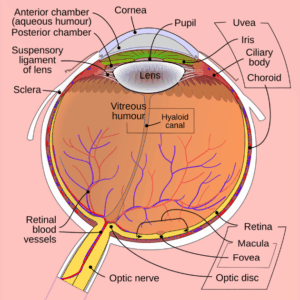



The vitreous humor, or vitreous body, is a clear, gel-like substance that fills most of the inside of your eye. It sits between the lens at the front and the retina at the back, making up about 80% of your eye’s volume.
The vitreous helps your eye keep its shape and plays a key role in clear vision.
What Is the Vitreous Humor?

The vitreous humor fills the vitreous chamber, which is the largest space inside your eye. Even though it looks like a simple, clear gel, it has a unique and complex makeup:
- 99% water
- A network of collagen fibers
- Hyaluronic acid (a molecule that holds moisture)
- Small amounts of proteins, electrolytes, and nutrients
The vitreous humor forms before birth and stays in your eye for your whole life.
Unlike the aqueous humor, which is the fluid at the front of your eye, the vitreous does not move or drain. It stays in place.
Although mostly water, the vitreous gel’s texture helps the eye maintain its shape.
Anatomy Of The Vitreous Humor

The vitreous humor plays several crucial roles within your eye.
- The cornea, the clear, curved surface at the front of the eye, protects the eye and helps focus incoming light.
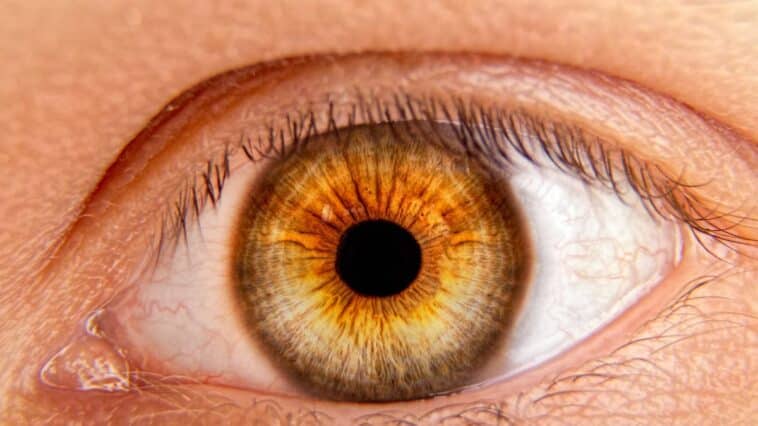
- Behind the cornea is the iris, the colored part of the eye. The iris controls pupil size, regulating the amount of light that enters the eye.
- The lens, located behind the iris, fine-tunes focus so light lands sharply on the retina.
- The retina lines the back of your eye and contains light-sensitive cells. These cells turn light into signals that travel to your brain through the optic nerve, allowing you to see.
Located between the lens and the retina, the vitreous fills most of the eye, helps maintain its shape, supports the retina, and allows light to pass through.
Knowing where the vitreous humor is can help you understand why it matters for your vision.
Function of the Vitreous Humor
The vitreous humor plays several important roles in helping you see clearly.
Maintains the Shape of the Eye
The vitreous humor fills the inside of your eye and presses outward. This helps your eye keep its round shape.
Keeping your eyes’ shape is important for clear vision.
Keeping your eyes’ shape is important for clear vision.
Supports and stabilizes the retina
The retina is a thin, sensitive layer that lines the back of your eye.
The vitreous humor presses against the retina and helps keep it in place.
The vitreous humor presses against the retina and helps keep it in place.
This support helps keep your vision clear.
Helps Light Pass Clearly to the Retina
The vitreous humor is clear, so light can pass through your eye easily.
This helps light reach the macula. The macula is the part of your retina that gives you sharp central vision.
This helps light reach the macula. The macula is the part of your retina that gives you sharp central vision.
If the vitreous humor becomes cloudy, your vision can get blurry or hazy.
Absorbs Shock and Protects the Eye
The vitreous humor acts as a cushion inside your eye.
It absorbs movement and vibration from things like walking, running, or moving your head quickly.
It absorbs movement and vibration from things like walking, running, or moving your head quickly.
This protection helps prevent injury to sensitive parts of your eye, such as the retina.
Helps Transport Nutrients
The vitreous lacks blood vessels, but it helps deliver oxygen and nutrients to nearby tissues.
Antioxidants in the vitreous help protect the lens from changes that can lead to cataracts.
How the Vitreous Changes With Age
As you get older, the vitreous humor becomes thinner and more watery. It can slowly pull away from the retina. This is called posterior vitreous detachment, or PVD.
PVD is very common after age 50 and is usually not harmful.
But it can cause changes in your vision, such as:
- Floaters: small dots, squiggly lines, or cobweb-like shapes that drift through your vision
- Flashes of light: quick flickers or sparkles, especially in dim lighting
Most of these changes are a normal part of aging, but you should monitor for them.
When to Get Checked
If you suddenly experience:
- A new burst of floaters
- Frequent flashes of light
- A shadow or curtain moving across your vision.
See an eye doctor right away. These symptoms could mean a retinal tear or detachment. This needs quick treatment to prevent permanent vision loss.
Aqueous Humor vs. Vitreous Humor
The eye has two clear fluids: aqueous humor and vitreous humor. Both are important for eye health, but they have different roles.
Aqueous humor is a thin, watery fluid at the front of your eye. It fills the space between the cornea and the lens.
Vitreous humor is a thick, gel-like substance that fills the middle of your eye, between the lens and the retina.
Vitreous humor is a thick, gel-like substance that fills the middle of your eye, between the lens and the retina.
Here is a quick summary of how these fluids are different and why they matter for your vision.
Where it is located | Front of the eye (anterior and posterior chambers) | Middle/back of the eye (vitreous chamber) |
Texture | Watery and constantly flowing | Clear, jelly-like and stable |
Main Role | Nourishes the eye and helps maintain internal pressure | Maintains eye shape and supports the retina |
Production | Continuously produced by the ciliary body | Formed before birth and does not regenerate |
Circulation | Continuously drains through the eye’s drainage system | Does not circulate or drain |
Age-related changes | Drainage issues can increase pressure (glaucoma) | Liquefies over time → floaters, PVD |
Common Vitreous-Related Conditions
The vitreous humor often changes with age, impacting your vision and leading to certain common conditions.
Vitreous Floaters
Floaters are a common change in the vitreous. Over time, tiny fibers in the vitreous can clump together and cast small shadows on your retina. These can look like:
- Small dots
- Strings or cobweb-like shapes
- Flashes or sparkles at the edges of your vision
Floaters are usually harmless, but they can be annoying. If you suddenly notice more floaters than usual, see an eye doctor.
Posterior Vitreous Detachment (PVD)
As you get older, the vitreous may shrink and slowly pull away from the retina. This is called posterior vitreous detachment.
PVD is very common, especially after age 50.
PVD is very common, especially after age 50.
Symptoms may include:
- A sudden burst of new floaters
- Flashes of light (like flickers or sparkles)
Most cases of posterior vitreous detachment are not harmful, but it is important to have an eye exam to make sure there are no retinal tears.
Vitreous Hemorrhage
A vitreous hemorrhage happens when blood leaks into the vitreous cavity. This often occurs due to broken blood vessels in the retina or a retinal injury.
Possible causes include:
- Diabetic eye disease
- Retinal vein blockages
- Head or eye trauma
Symptoms:
- Cloudy, hazy, or reddish vision
- A sudden drop in visual clarity
Treatment depends on the cause. It may include medicine, laser therapy, or surgery to remove the blood from your eye.
Retinal Tear or Retinal Detachment
If the vitreous pulls away too hard, it can tear the retina. A retinal tear can lead to retinal detachment. This is a medical emergency that can cause permanent vision loss.
Warning signs:
- A dark curtain or shadow in vision
- Sudden increase in floaters
- Flashes of light in one or both eyes
If you have these symptoms, see an eye doctor right away.
Macular Hole
Sometimes, when the vitreous pulls away, it tugs on the macula. The macula is the part of your retina that gives you sharp central vision. This can cause a macular hole.
Common symptoms:
- Blurry or distorted central vision
- Straight lines appear wavy.
Surgery is usually needed to fix a macular hole.
When to See an Eye Doctor
See an eye doctor right away if you notice any of these symptoms:
- A sudden increase in floaters
- Light flashes in one or both eyes
- A dark curtain moving across your vision
- Sudden, significant changes in your vision
These symptoms could mean a retinal tear or detachment. These are medical emergencies.
FAQ
Is the vitreous humor the same as the aqueous humor?
No. The aqueous humor is a watery fluid located in the front of the eye that is constantly renewed.
The vitreous humor is a gel-like substance in the back of the eye and does not regenerate during a person’s lifetime.
The vitreous humor is a gel-like substance in the back of the eye and does not regenerate during a person’s lifetime.
Can the vitreous humor change with age?
Yes. With age, the vitreous can become thinner or more fluid, sometimes causing it to pull away from the retina. This is called posterior vitreous detachment (PVD) and often causes floaters or brief flashes of light.
Are floaters a problem?
Floaters are usually harmless, especially if they appear gradually.
However, sudden new floaters, flashes, or a dark shadow in your vision may indicate a retinal tear or detachment, which requires urgent medical attention.
However, sudden new floaters, flashes, or a dark shadow in your vision may indicate a retinal tear or detachment, which requires urgent medical attention.
Can the vitreous humor be replaced?
Yes. In serious conditions such as retinal detachment or vitreous hemorrhage, eye surgeons may perform a vitrectomy, removing the vitreous humor and replacing it with sterile fluid or gas to restore clarity and support.
Conclusion
You cannot see the vitreous humor, but it is very important for your eye health and vision.
It helps your eye keep its shape, supports the retina, lets light pass through, and cushions your eye from movement.
Regular eye exams are the best way to check for changes in the vitreous humor, especially as you get older.